2024 Life Logs, Day 124: Mystic Seaport Museum Field Trip
Date: Friday, May 3, 2024
Weather: Mostly Sunny; High Temp 59 (Mystic, RI), Low 43 degrees F
Location: At Home on Lakeview Avenue, Falmouth, MA
The Mystic Seaport Museum is located on 19 acres along the Mystic River in Mystic, Connecticut.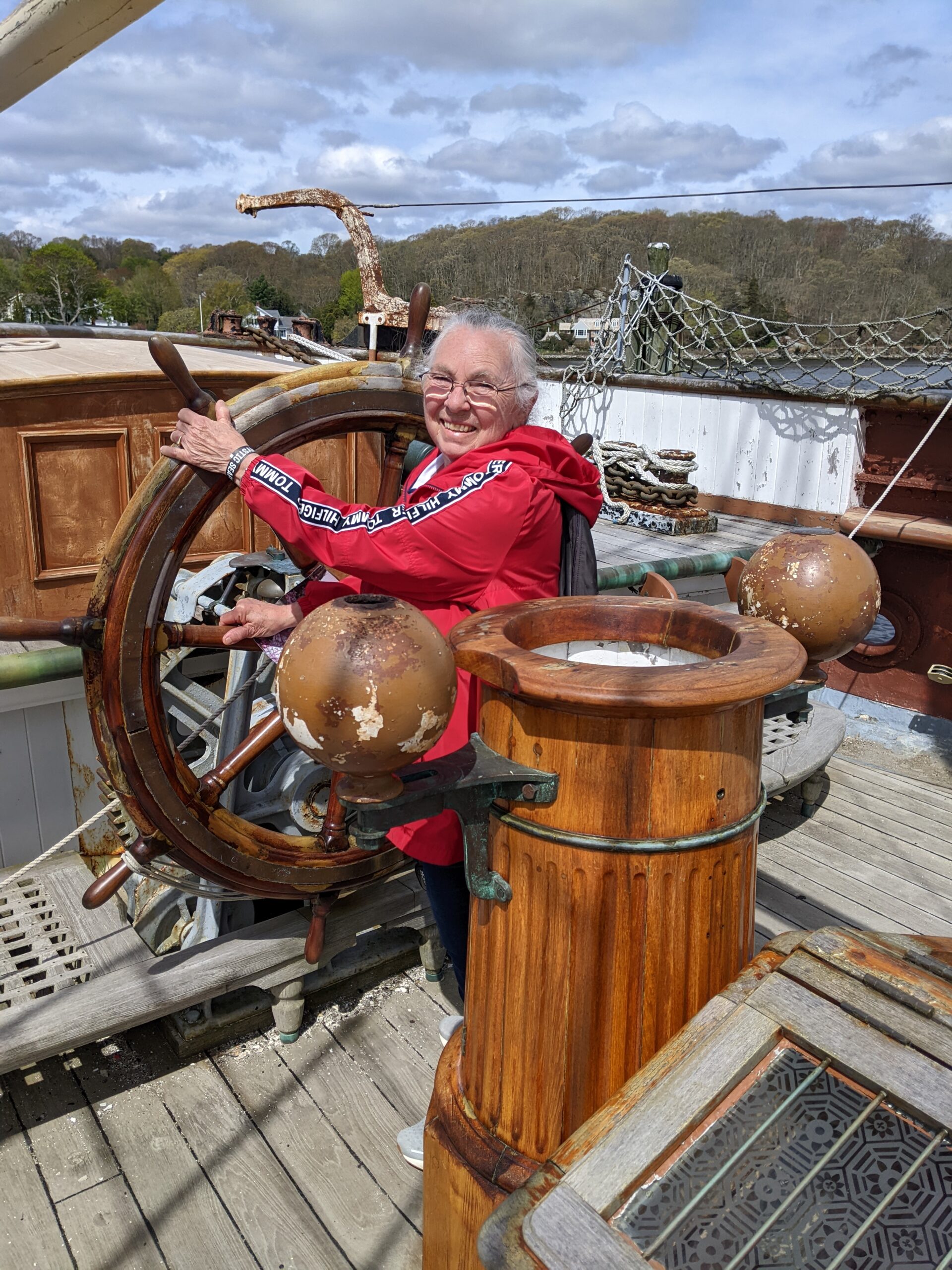 It purports to be the leading maritime museum in the United States. Its mission is to “inspire an enduring connection to the American maritime experience” and it does that through a recreated New England coastal village with a working shipyard and formal exhibit halls. “The Museum is home to more than 500 historic watercraft, including four National Historic Landmark vessels, most notably the 1841 whaleship Charles W. Morgan, America’s oldest commercial ship still in existence.”
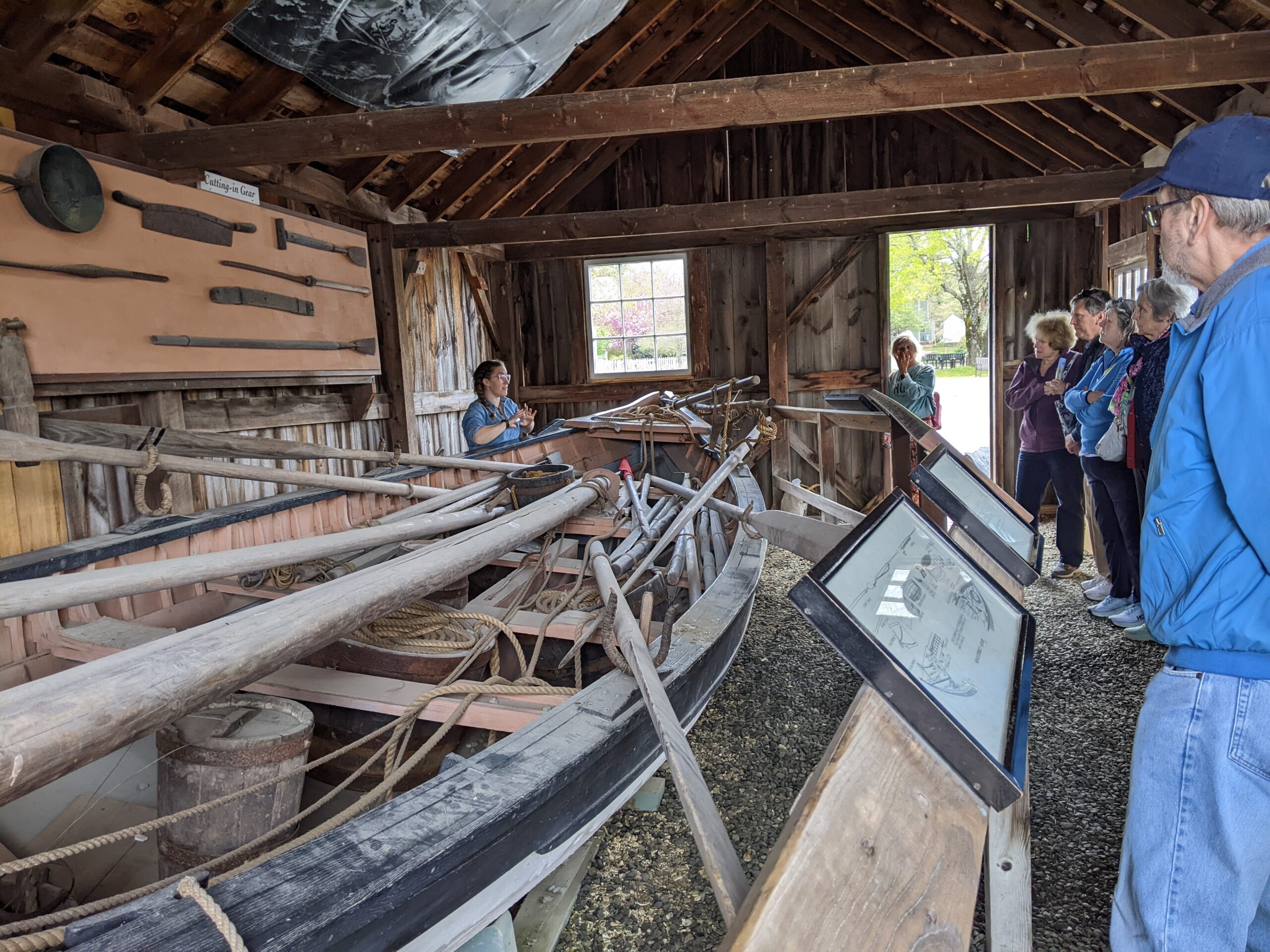
A few members of our Newcomers/Encore Field Trip group ventured to the museum today. It was a challenge for my knee, but I survived and truly enjoyed the day. This was my third visit, and I could go again and again. There is so much there to see and experience. Mark was with me on my two previous visits where we spent much of our time in the working shipyard. The first time we visited was more than ten years ago when the Charles W. Morgan whaling ship was being renovated and we were given a very detailed guided tour of the entire ship and the whaling process. “She is the world’s oldest surviving (non-wrecked) merchant vessel, the only surviving wooden whaling ship from the 19th century American merchant fleet (of an estimated 2,700 built), and second to the USS Constitution, the oldest seaworthy vessel in the world. The Morgan was designated a National Historic Landmark in 1966.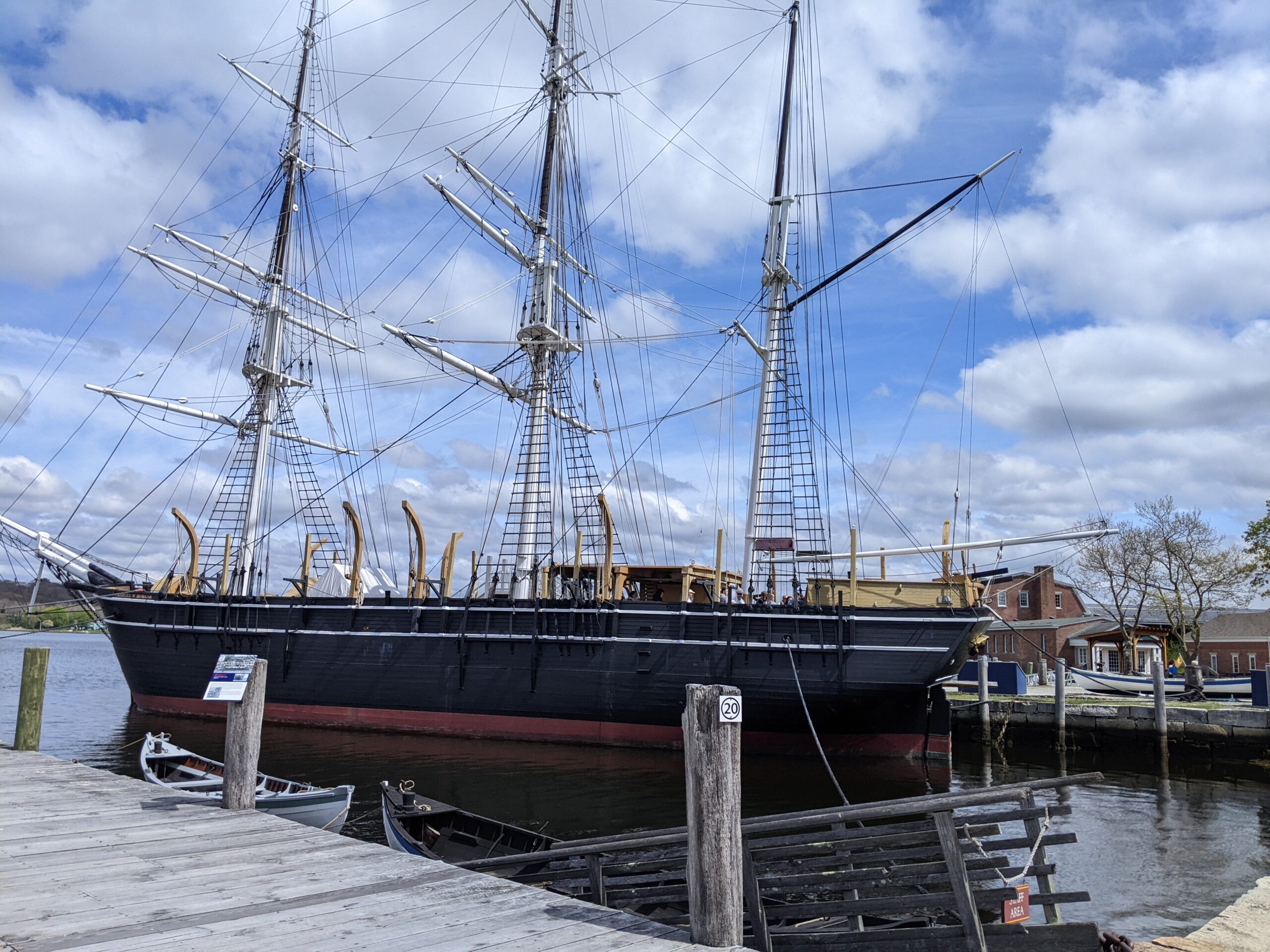 Today the renovated Morgan is on a dock in the village next to a small exhibit building where there is a whaling boat like the one deployed by the Morgan to go out to kill the whale and tow it back to the ship. There was a very informative thirty-minute lecture today about the whaling process.
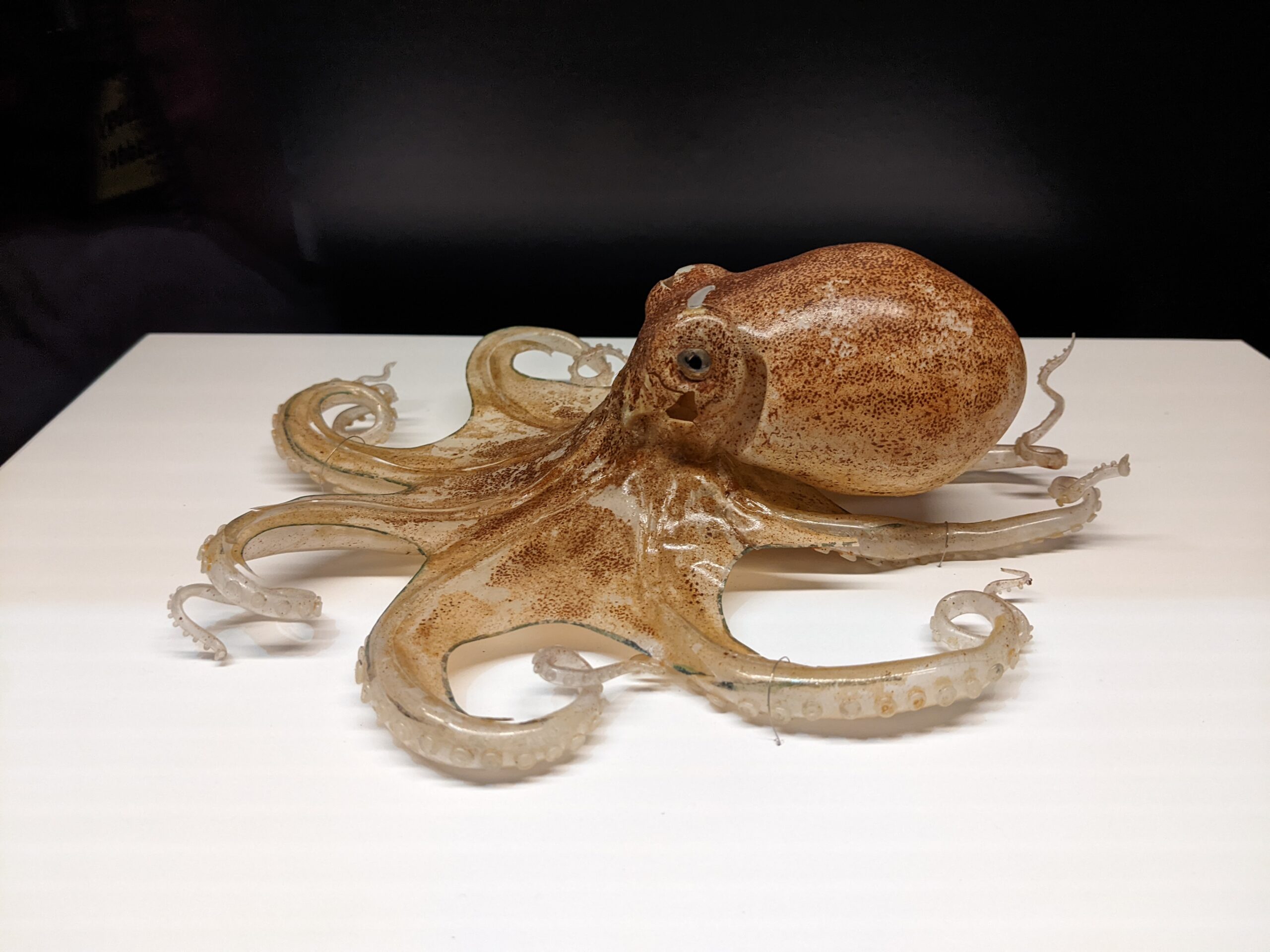
The highlight of my day, however, was in a tiny exhibit hall containing the Blaschka brothers’ glass reproductions of marine invertebrates. The exhibit was appropriately named Spineless: A Glass Menagerie of Blaschka Marine Invertebrates. These reproductions were originally used as teaching tools in science labs, but today they are displayed as works of art. The display of glass flowers and other plants that are on display in the Harvard Museum of Natural History were also done by the Blaschka brothers. I love the glass flowers, and today I fell in love with the spineless invertebrates, the octopuses being my greatest loves. They are so realistic that you think you are looking at the actual specimens.