
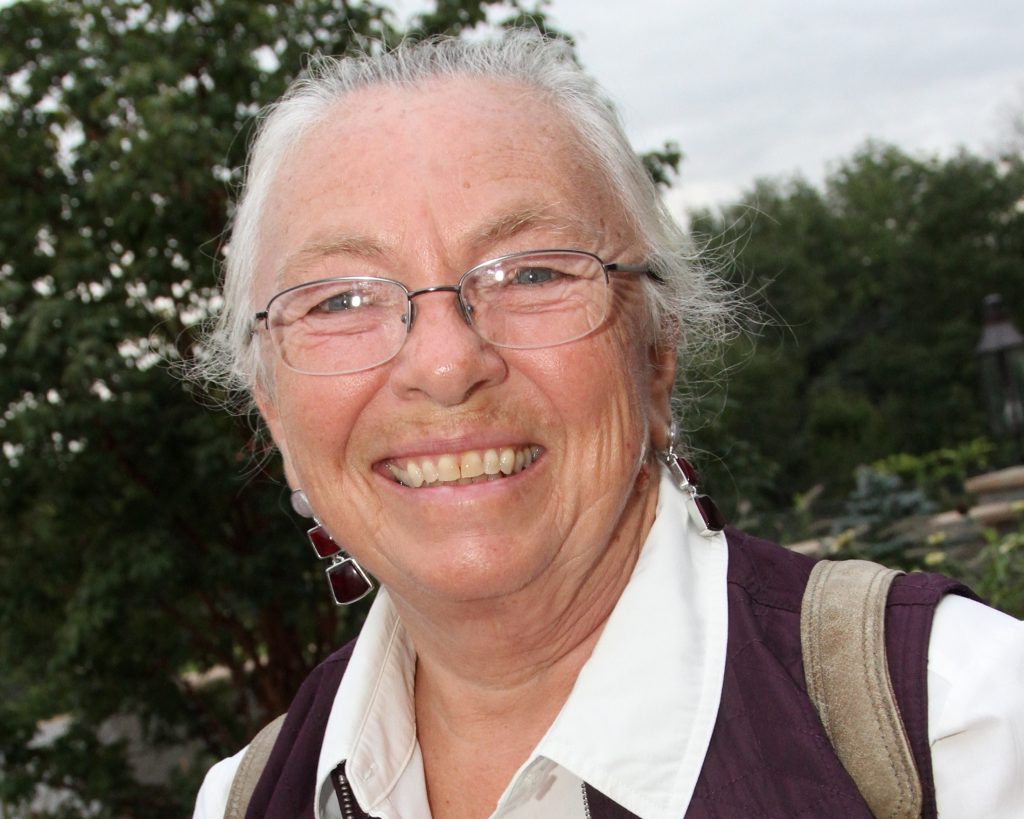
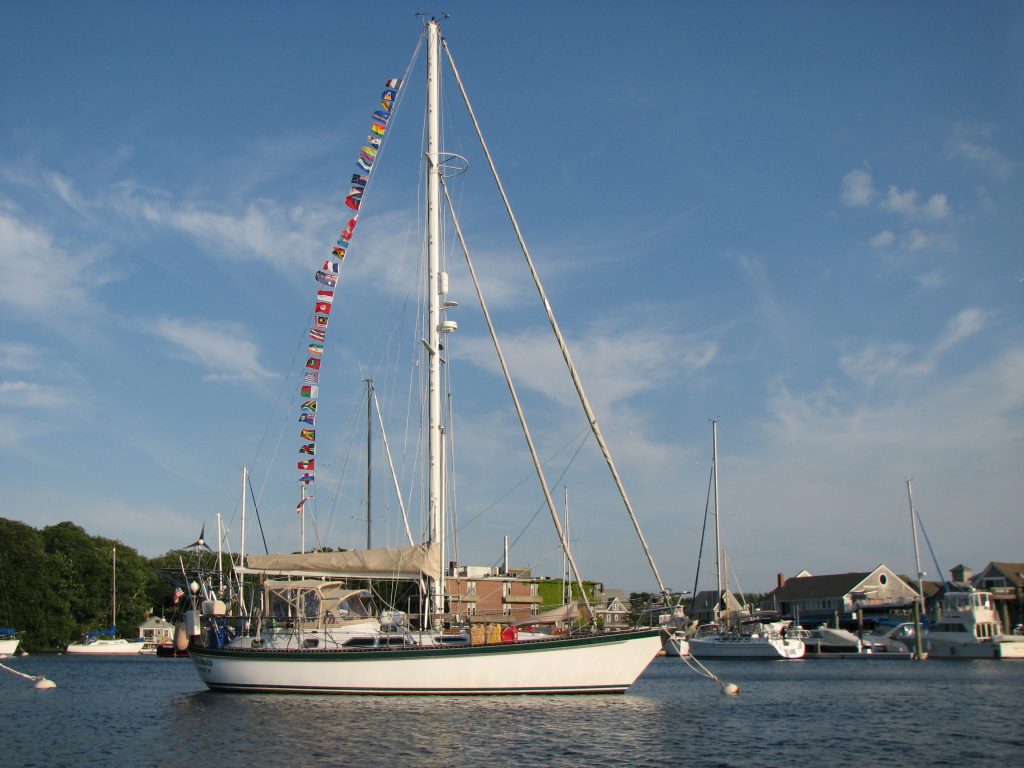
After almost 6 years of traveling, we sailed into Woods Hole on Cape Cod. We continued living aboard for the next five years and I wrote about that, adding ‘and Beyond’ to the title of the blog. Then shortly before Mark’s death in 2016, we sold our beloved Windbird and my travel logs became land logs. At this point, I had written a daily account for each and every day for 11 years. I fully intended to end the blog at that point, but when I wrote that news in a log, I got many responses saying that I really needed to keep posting. At the same time, I realized that I couldn’t stop writing. Summarizing each day had become a permanent part of my life and I will probably continue writing until I can no longer. These postings reflect the ordinary, and sometimes the extraordinary, days in my life and I would like to invite you to join me on my journey.
Day 166, Year 1: Santa Cruz to Isabella
Day 166, Year 1: Santa Cruz to Isabella
Date and Time: Saturday, April 1, 2006
Water Temperature: 75 degrees F
Weather: Partly Cloudy Morning, Blue Skies and Sunny Afternoon
Location: Puerto Villamil, Isabella Island, Galapagos
It was early to rise this morning, but even with the early get up, we didn’t get out of Puerto Ayoro until about 0800. In that port, you have to have an anchor out in front and an anchor off the stern. Our stern anchor had held nicely, but apparently too nicely. It just would not come up. It is evidently wedged under a rock. If we had taken the time to dive on the anchor to dislodge it, it would have been too late to leave for Isabella today, so not wanting to lose a day of exploration, we tied empty water bottles to the line to act as a marker, and we hope it will still be there when we return.
We exited the harbor and almost immediately spotted sea turtles. Unfortunately, we didn’t find the wind, so we had to motor the 48 miles to Isabella. When we got close enough to see the harbor, it looked like a forest of masts. Many boats are here, so it is a snug fit. As soon as we anchored, Mark spotted some golden-colored rays. He called for Heather and we found out that these are called golden cowrays, not endemic here, and only occasionally seen in the Galapagos. I guess this was the welcoming committee. We then put our energy into getting the dinghy in the water and began exploring the reef that separates the anchorage from the swells and surf rolling in from the ocean. We spotted our first Galapagos penguins and all of us were very, very excited. For Jed, this is the fifth or sixth species of penguin he has seen in their natural habitat, but for the rest of us, it was our first sighting of penguins in a natural setting. We continued exploring along the edges of the reef and then headed over to the dinghy landing across the bay. When we got there, we spotted Sylvia and Doug from Windcastle as they were heading back to their boat. They said they were going on a boat tour tomorrow to Cabo Rosa, an area about 25 miles from here, and we jumped at the change to go along.
I still haven’t completed the logs from our tour, but I will keep working on that. It seems like everyday is filled with so many new discoveries and it is hard to keep up with it all. Each day this week has featured a special species. Monday of this week we were in islands off the north and west coast of Santa Cruz. This was the day of the great and magnificent frigates and blue-footed boobies, as well as a great number of phenomenal fish we spotted while snorkeling. Tuesday was the day of sea lions off the coast of San Cristobal. We swam with so many that they wore us out as we tried to imitate their antics. Wednesday we went to Espanola and it was the day of iguanas and our spotting of the waved albatross and Galapagos hawk. Thursday was home again and our visit with Lonesome George, a giant tortoise that is the last of his species. Friday was our encounter with bureaucracy, and I hope that is an endangered species. And today we saw the Galapagos penguins. We are seeing so much that it is almost overwhelming, but we are enjoying every minute. Maybe tomorrow we get to swim with the penguins. That would be my hope for the day.
 |
| 060401 Day 166 Isabella–Puerto Villamil Anchorage |
Day 165, Year 1: Frustrations
Day 165, Year 1: Frustrations
Date: Friday, March 31, 2006
Weather: Clear Blue Skies; Calm Anchorage with Almost No Wind
Location: Academy Bay, Puerto Ayoro, Santa Cruz Island, Galapagos
It’s always good to be back home, but today was one of those frustrating days of trying to get things done so we can take off on the next Galapagos adventure. We have been trying to get a money transfer from a retirement account ever since we arrived here, and today we spent the entire day in town trying to deal with this. Jed is not feeling great, so he and Heather spent the day on the boat. So I’m sure tomorrow will be a better day. We leave for Isabella in the morning and should arrive there in the late afternoon. Isabella is by far the largest island in the Galapagos, but it is not the most populated. We look forward to seeing Galapagos penguins and exploring the volcanoes there. There are six volcanoes, but we will probably only be able to visit the oldest one-Sierra Negra–which is closest to Puerto Villamil where we will be anchored. We will report in tomorrow night on our first discoveries in our new location.
Day 164, Year 1: Back Home in Academy Bay, Puerto Ayoro
Day 164, Year 1: Back Home in Academy Bay, Puerto Ayoro
Date: Thursday, March 30, 2006
Weather: Clear Blue Skies; Wind in the Anchorage
Location: Academy Bay, Puerto Ayoro, Santa Cruz Island, Galapagos
We have returned to Windbird in Academy Bay after a fabulous four days of touring aboard the Sulidae. In a nutshell, experiencing Galapagos wildlife was phenomenal, food was great, but sleeping was a challenge. The cot-like bunks were barely padded and we traveled every night and tried our best to sleep to the sound of the very loud 280 hp engine lullaby. We chose the “economic cruise”-below tourist superior class, first class, and luxury class-so although the Sulidae was not perfect, we feel we got what we expected. The reason for the trip, seeing the Galapagos wildlife, was a phenomenal success. So we are very happy.
We left the island of Espanola around 1630 on Wednesday and arrived here in Puerto Ayoro before midnight. Before the 0700 breakfast, the launch took Mark, Heather, and Justin to Windbird with all of our bags. When they returned, everyone aboard ate breakfast, and then we were off to the Darwin Center. Mark and I had visited it prior to this, but it was the first visit for Heather and Jed. We saw the baby tortoises being raised in pens and then saw different varieties of giant tortoises walking about in the early morning. When Mark and I visited before it was later in the afternoon and most of the tortoises were hiding, so seeing so many of them was a pleasant surprise. We also got to see Lonesome George this time. They have him in an area with two females of the most closely related sub-species, but he is just not interested in mating with them. There is a search underway to find females of more closely related sub-species. He is the last of his species, so if this fails cloning will be the next step in trying to continue his line.
We were finished with our tour by 0930 and all of the other people in our group said their goodbyes and headed to the airport. All but one was flying back to mainland Ecuador on a noon flight. We shared some wonderful experiences together and will always remember our time with Julie from Michigan, Louis and Evelyn and Michael from Switzerland, and Steffi and Patric and Maike and Soeren from Germany. We will also remember the cheerful Sulidae crew, Henry, Jorge, Leo, Captain Max, Naturalist Lenny, and our fantastic cook, whose name we unfortunately did not get. He rated an A+ for his culinary delights.
We ended our Darwin Center tour and said our goodbyes. At that time, we were standing next to the Darwin Center “store”. Heather and Jed took advantage of the location to do a little souvenir shopping. We then headed to the research station offices to get help. Jed had accidentally dropped a roll of exposed film from the tour inside the fence surrounding the baby tortoises. He had tried to retrieve it, but no luck. We hoped that someone in the research station could help. But as it turns out, scientists do not have keys to the area; only National Park personal can get you into the fenced areas. Heather and Jed continued the search to get help and Mark and I stayed by the pens and tried to figure out ways to get the film. Jed had tried using sticks to grasp it and could not. Mark found an Opuntia cactus pad that had dried and curled and tried to use that as a scoop. Still no luck. Heather returned and suggested that we put a handle on the scoop. Bingo! That did it. Then we had to find Jed and call off the National Park search for the misplaced film canister.
We all strolled slowly back to town and did a little more window shopping on the way. I think we all realized that we were now in charge of our own tour and we started thinking of all the things we needed to do before departing Santa Cruz for our next stop-Isabella. We headed back to Windbird and it was good to be back home. But that settled feeling was quickly disrupted. The Sierra Negra, a large National Park vessel, decided to reset its anchor. This vessel had been anchored next to us shortly after we arrived here, and we were hoping she was not returning. It is unsettling to be in an anchorage next to such a large vessel, especially when the wind is blowing as it was today. We watched as she moved and then all of a sudden, she was being blown down onto the sailboat in front of us, the Mia II from Victoria. It looked to us like the Sierra Negra’s anchor chain had caught the anchor chain of the Mia, and all of a sudden they were playing bumper cars. No one was aboard the Mia, but soon crew from the Sierra Negra hopped aboard to fend off. We were afraid that the Mia’s anchor was going to break loose, setting both boats down on us, so we started the engine and were prepared to do whatever was necessary to avoid a catastrophe. Eventually the Sierra Negra was able to release the stern line they had set and move forward. They continued to struggle, but finally got an anchor set in a safe place. About that time, Paul and Julie from the Mia returned to their boat. I took pictures of the collision and we were asked by Paul and Julie of Mia to write an accident report and print some of the pictures for them. It is really scary to think that all can be well one minute, but then the wrong move of one other boat can truly cause huge problems.
The rest of our day was spent in town dealing with business matters that seem to take forever in this part of the world. Just trying to send pictures to the website can take hours and sending or receiving a fax is even worse. At the end of the day, Heather, Mark, and I took Patrick and Margaret from Aqua Magic out to dinner. They watched our boat while we were gone, and after witnessing the Mia incident, we sure were glad to have someone watching after us. Patrick conveyed that conditions had been rough while we were gone, but we only sustained one casualty-one side of our anchor snubber broke in the huge swell-but all was still fine aboard Windbird.
I will be posting logs from our tour in a day or so. Pictures from here are very hard to send, so it might be a couple of weeks before those reach the US and get posted. In the meantime, I will try to do my best to keep you up-to-date on our adventures through these logs.
 |
| 060330 Day 164 Galapagos Tour Day 5–Darwin Center, Santa Cruz |
Day 163, Year 1: Day Four on the Sulidae–Espanola
Day 163, Year 1: Day Four on the Sulidae–Espanola
Date: Wednesday, March 29, 2006
Weather: Partly Cloudy and Hot
Windbird’s Location: Academy Bay, Puerto Ayoro, Santa Cruz Island, Galapagos
Sulidae’s Location: Gardner Bay, Espanola and Punta Suarez, Espanola
Espanola is the southernmost Galapagos island. The English name for this island is Hood and as you will see, many of the species here are found only on this island which makes them endemic and they have the English name of Hood as part of their name. We arrived in Gardner Bay early in the morning, anchored, had breakfast, and headed to shore. Lenny, our guide, had told us the night before that we would spend the morning on the beach exploring and swimming. What he couldn’t prepare us for was the variety of wildlife we would encounter during the day on this island that is one of the oldest in the archipelago. At first glance, it just looks like a low-lying island with very little vegetation. On closer inspection, it is a world of what seems like magical creatures.
First Stop: Gardner Bay, Espanola
Highlights:
” white beach for as far as you can see
” swimming in the beautiful turquoise water
” fresh turtle tracks and turtle “nests” just covered
” playful sea lions romping on the beach
” territorial sea lion males keeping young pups in tow
” hermit crabs on the beach
” ancient looking chitons
” green algae on black volcanic rock with red marine iguanas-stunning
” a Galapagos hawk
” the Hood Mockingbird
” snorkeling around Gardner rock
Imagine a white sand beach that stretches as far as you can see and turquoise blue water inviting you to come for a swim. And then you step ashore to be greeted by the barking of sea lions-mommas, papas, and pups are everywhere lazing about on the white sand. As you walk down the beach you see the tank-like tracks of a turtle who has returned to the sea. You follow the tracks and find a freshly covered turtle nest. You keep walking along the water’s edge, dodging sea lions that are sunning themselves here and there and you come to a place where black lava rock is exposed on the water’s edge. There is a green algae that looks a little like sea lettuce growing on the black rocks, bright red Sally Lightfoot crabs crawling hither and yon, and marine iguanas decorated with red swimming in the water and crawling on the volcanic rocks. It is a stunning sight. Welcome to Espanola. We experienced all of this on our walk down the beach and then turned to walk back to where we had started. We saw a Galapagos hawk perched on top of the tallest rock, we played with hermit crabs, and we even found ancient looking chitons. The Hood Mockingbird, endemic, of course, plays along the water’s edge and talks to us as we walk along. A territorial male sea lion chases pups that have gotten away and are frolicking in the water. The big guy wants them back up on the beach. He chases one and gets it up on the sand while the other one escapes. He then goes to get the second one and the first decides to go back in the water. Papa is barking and barking, but the young pups are hard to harness. It is a full-time job, but then all parents know that. We decide it is time for us to take a dip in the beautiful turquoise water. We’re a little afraid that the territorial male will try to chase us out of the water, but he is way too busy with those pups to worry about us. We see the Sulidae panga heading to shore to pick us up, so we get out of the water and back to the Sulidae. The boat moves to a new anchorage just offshore right next to Gardner Rock. Here we get into the panga and start a circumnavigation of the rock. We get part way around and then Lenny tells us to jump in and that he will meet us on the other side. There are a few sea lions in the water, but the most amazing thing here is the sea life hiding on the face of the rock just below the water level. We see many of the fish that we have already experienced. There are little indents in the rock that look like the openings of caves. We explore these and sometimes almost bump into sea lions who are coming out as we are going in. We work our way back to the other side of the huge rock and come to a shallow area. We find a huge flounder on the bottom as well as more playful sea lions. It was a great last snorkel for our Galapagos tour.
Second Stop: Punta Suarez, Espanola
Highlights:
” marine iquanas covering their eggs
” lots of iguana nests
” mating ritual of the Blue-footed Boobies
” Blue-footed Boobies nesting
” Nazca Boobies (called masked boobies)
” Swallow-tailed Gulls nesting
” the “blow hole”
” sea lions surfing the waves and porpoising their way to shore
” male albatross practicing their mating ritual
” Hood Racer-endemic Galapagos snake
After lunch, the Sulidae moved to the other side of this island and we went ashore. We were greeted by more sea lions and then started on the path across the island. Marine iguanas are underfoot. They are everywhere and Lenny points out that we are walking through an area where they are nesting. We watched as they scratched in the dirt to cover their nests. We were now starting to walk along a cliff rising high out of the ocean. Many birds nest on the face of the cliff and it was here that we saw the beautiful tropic birds flying in from the ocean and soaring past us. These birds are bright white with a red beak and a long, flowing white tail. Spectacular. But it gets better. We see Swallow-tailed gulls sitting on their egg or eggs in some cases, we see Nazca Boobies with their funny little masks of black sitting everywhere, some mature, some very young and fuzzy, and then we come to Blue-footed Booby land. Some of the boobies are engaged in their mating dance, lifting their funny little blue feet sort of like they are marching in place and then lifting their wings. The females look demurely down at the ground and then their beaks touch. Other Blue-footed Boobies have obviously completed the mating process are sitting or standing over their egg. Some had two eggs, but most had only one. The female sits on the egg and then stands up to cool off. That’s when we got to see the eggs. There was one more thing I wanted to see and that was mating Waved Albatross. We pass the blowhole that is shooting water up like a fountain and then head across the low cliff area that is the perfect nesting spot for the Waved Albatross. These large birds have a hard time getting air borne, especially the young birds, and this cliff on Espanola is the perfect landing and take-off spot. So this is where they mate. Lenny doesn’t think they have arrived yet, too early in the season, but I almost squeal as we spot the first male. He is just sitting, but we travel on and find two males that are practicing their famous mating dance. The females have not arrived yet, but I was thrilled to get to see the males. As we head back to the starting point, we see one more endemic species, the Hood Racer. It was quite a day.
 |
| 060329 Day 163a Galapagos Tour Day 4–Espanola 1, Gardner Bay |
 |
| 060329 Day 163b Galapagos Tour Day 4–Espanola 2, Punta Suarez |
Day 162, Year 1: Day Three on the Sulidae
Day 162, Year 1: Day Three on the Sulidae
Date: Tuesday, March 28, 2006
Weather: Clear Blue Skies and Hot
Windbird’s Location: Academy Bay, Puerto Ayoro, Santa Cruz Island, Galapagos
Sulidae’s Location: Leon Dormido and Puerto Baquerizo Moreno, San Cristóbal Island
First Stop: Leon Dormido, also known as Kicker’s Rock
Highlight: Sailing the Narrow Channel
During the night, the Sulidae motored to Wreck Bay, San Cristobal Island. When I woke up I looked out the window of our cabin and we were right beside our friends Doug and Sylvia on Windcastle. It was 0630, but we called to them and woke them up to say hello as we were leaving for Leon Dormido. We made arrangements to visit them later in the day and then off went the Sulidae. Leon Dormido, commonly known as Kicker’s Rock, looks like an ancient cathedral of rock rising out of the ocean. When we reached the rock, we “circumnavigated” checking out all sides carefully. There are a number of fissures in the rock, but there is one that is large enough to provide a channel that can be negotiated by a panga or narrow sailboat. The Sulidae was just the right size, and even though it was too rough for us to snorkel, we did motor through the channel. It was really something to see those rock walls that were on either side of us heading up into the sky. When we were almost through, the boat was thrown a little to one side and there was a tense moment as the Sulidae got herself back on course. The captain and crew were joyous when we emerged safely. We sat in wonder and just stared at the small channel for a few minutes and then headed around the rock to see all sides of it again. Once we had thoroughly examined this volcanic rock of tuff, off we went to Isla Lobos.
Second Stop: Isla Lobos
Highlight: Swimming with the Sea Lions
It took us about an hour to get back to Isla Lobos. This is a tiny island of basaltic rocks that is very close to shore. We took a quick walk across the island. On land we saw many iguanas and mating Blue-footed Boobies, but the real attraction was the number of sea lions. We headed back to the Sulidae to get ready to snorkel with these guys. This was really a treat. There were at least 25-30 sea lions and many were young pups. They are absolutely fearless. As you are snorkeling, they shoot straight toward you, look you in the eye, and then quickly veer off to avoid a head-on collision. As I was snorkeling, other sea lions would come from under me and look me in the eye. We were there in the water, belly to belly, and even though I’m not very acrobatic in the water, I would turn and they would turn; I would roll and they would roll. These little creatures invite you to dance with them and the invitation is irresistible. I think Mark, Heather, Jed, and I will remember this snorkel for the rest of our lives as a very special experience.
Third Stop: Puerto Baquerizo Moreno, San Cristobal Island
Highlight: A Visit to Town and a Visit with Windcastle
Puerto Baquerizo Moreno is a sleepy little town that is changing rapidly from old wooden houses to more modern concrete buildings. It is obviously awakening to its ecotourism possibilities. There is a lot of construction on the waterfront and it appears that they are building a “welcome center” something like the one in Puerto Ayora. Mark and I went into town to walk around while others stayed on the boat and read, and then we met them at the Interpretation Center later in the afternoon. The Interpretation Center is an information center on human and natural history and it has wonderful paths that wind down to the water and through the arid zone. One path takes you to the spot where they think Charles Darwin first landed in the Galapagos. Another takes you to a viewing tower and others lead you through the arid landscape and back to the Center. We met the rest of the group and toured the Interpretation Center, and then Mark and I headed back to town. There are taxis here, but not nearly as many as in Puerto Ayoro. Puerto Baquerizo Moreno is the political capitol of the Galapagos, but it is not the hub of activity. That prize goes to Puerto Ayoro.
When we got back to town, Mark and I got a water taxi out to Windcastle. It was great to visit with them and make arrangements to meet them in Isabella. Just as the sun was going down, we looked in the water over towards the Sulidae and saw two people swimming. Since it was getting dark, we wondered who it was, but soon became evident that it was Heather and Jed swimming over to say hello. They “landed” successfully and we then all said our farewells and headed back to the Sulidae. During the evening, the Sulidae picked up anchor and headed to Espanola. Tomorrow we will visit Gardner Bay and then move around to Punta Suarez for the afternoon. Espanola is the southern most island in the Galapagos and we are anxious to experience the wildlife found there.
 |
| 060328 Day 162a Galapagos Tour Day 3–Isla Lobos |
 |
| 060328 Day 162b Galapagos Tour Day 3–Leon Dormido |
 |
| 060328 Day 162c Galapagos Tour Day 3–San Cristobal |
Day 161, Year 1: Day Two on the Sulidae
Day 161, Year 1: Day Two on the Sulidae
Date: Monday, March 27, 2006
Weather: Clear Blue Skies and Hot
Windbird’s Location: Academy Bay, Puerto Ayoro, Santa Cruz Island, Galapagos
Sulidae’s Location: North Seymour and South Plaza Island
First Stop: North Seymour
Highlight: Land of Mating Frigate Birds and Blue-Footed Boobies
We started our morning by heading to North Seymour. This is an island just north of Santa Cruz. Lenny, our naturalist guide aboard the Sulidae, had briefed us on Sunday evening of what we should see during our travels on Monday. North Seymour is a very small island of volcanic rock uplifted from the ocean bottom. It is dry and has only a few Dwarf Palo Santo trees and Opuntia cacti, but it is home for lots of sea lions, marine iguanas, and as mentioned in the “highlight” for this stop–mating frigate birds and blue-footed boobies. The Sulidae anchored and we headed ashore in the panga. The rocky shore was lined with birds of all kinds, as well as sea lions and iguanas. Once we were ashore, we started our walk through a Blue-footed Booby colony. We did not see nesting boobies here, but we saw many couples engaged in the courtship rituals. They do a little dance, raising one foot and then the other, and then the male spreads his wings. The pairs we were watching stood side by side and often their beaks would touch. It looked like they are kissing! They are such funny looking birds with such bright blue webbed feet and we were thrilled to see so many.
As we continued our walk across the island, we next came to a Frigate Bird nesting area. Frigates have the largest wingspan-to-weight ratio of any species of bird. Their wingspan is as large as an albatross. They look like they simply hang in the sky, hovering and gliding everywhere here in the Galapagos. The males are black and the females are black with a white throat patch. There are two varieties found here: the Magnificent Frigatebird and the Great Frigatebird. The Magnificent has a purple sheen to their black feathers while the Great has a green sheen. The spectacular thing about these birds is the bright red throat patch displayed by the male during mating season. That is now and the males were gliding through the air with their red “balloons” fully inflated. It was spectacular to watch. And then we came to the nesting area and there were pairs everywhere sitting in the tops of the low Saltbush in their nests of sticks. The red throat pouch is just beautiful. We also saw many young frigates
There were many land and marine iguanas here and lots of seals, but the birds definitely stole the show. After returning to the Sulidae for a snack, we then snorkled along the low, rocky coastline. We saw lots of beautiful fish here. Some of the varieties were the same as those we had seen in the Caribbean, but the fish here must take vitamins. They were much larger than their Caribbean relatives. The King Angelfish was one of our favorites. It is the only angelfish in the Galapagos and is a dark bluish-purple with a white stripe cutting right across its middle from top to bottom. The dorsal and and anal fins are a bright orange to yellow and there is a “crown” of light blue dots on the forehead. The ones we saw were close to the maximum length of a foot and a quarter. We also saw Giant Damselfish which are a dark blue with white edging along the fins, Yellowtail Surgeonfish, and Orangeside Triggerfish. These fish were about the same size as the King Angelfish, some a little smaller. We saw lots of smaller Yellowtail Damselfish and Panamic Sergeant Majors. The Sergeant Majors are usually yellow-white with vertical black stripes, but many of the ones we saw today were blue. We found out that the color change happens in the breeding male. We saw lots of Leather Bass which are gray to olive green in color with white blotches and small black spots all over the body. There were Blue-Chin Parrotfish which we had seen in the Caribbean, but a new addition was the Bumphead Parrotfish which indeed has a big bump on its head. Another fish we saw with a bump on its head was the Mexican Hogfish. The most colorful of the small fish here was the Cortez Rainbow Wrasse which sports colors of violet to reddish green to blue. Needless to say, snorkeling here was beautiful, but add to the fish the fact that we were swimming with sea lions at the same time. These guys are so graceful in the water and not the least bit afraid of humans. It wasn’t quite lunchtime and we were already becoming overwhelmed with the Galapagos wildlife. We are beginning to understand why these islands are often called the “Enchanted Isles”.
Second Stop: South Plaza Island
Highlights: Iguanas, “Charlie” the Sea Lion, Tropicbirds, and Nesting Swallow-tailed Gulls
We left North Seymour and motored past the white sands of Mosquera Islet. As we headed south, Santa Cruz island was to starboard and we were able to observe the volcanic rock wonders along the coast. In a couple of hours, we arrived at South Plaza. This island was also uplifted by tectonic action. There is a North and South Plaza, but no visitors are allowed on North Plaza due to scientific research underway there. Close-by, Cerro Colorado, known as the Red Rock, rises up out of the sea. South Plaza is covered by Sesuvium or Carpetweed in various shades of green, yellow, and red. It indeed does look like a carpet on the rocky island. The type of carpetweed that grows here is Sesuvium edmonstonei and is endemic to this island. We were greeted at the dock by “Charlie”, a famous territorial male sea lion who lives here with his harem. He has been known to be quite aggressive, even biting if you get too close, but today he stayed in the water and just barked at us.
This island is home to many iguanas, both land and marine. The yellow-brown land iguanas had mustard yellow heads and were literally everywhere. We now know why one of the t-shirts sold in the Galapagos has a caution sign with “iguana” written on it. We had to watch constantly or risk stepping on one of the tails of these prehistoric looking creatures. On the south side of the island, there is a dangerous cliff where guides have actually fallen and been killed or hurt badly. We proceeded cautiously but truly enjoyed the to see their speckled eggs. They nest right on the rocks on the cliff. The sea lions, marine iguanas, and birds all live in harmony here. We snorkeled here after our walk and had a great time with the sea lions. Louis, one of the guys on our tour from Switzerland engaged in a sea ballet with the friendly sea lions and it was quite a show. I added one new fish to my list—the Giant Hawkfish, also known as the Hieroglyphic Hawkfish due to its interesting designs.
Day 160, Year 1: Day One on the Sulidae
Day 160, Year 1: Day One on the Sulidae
Date: Sunday, March 26, 2006
Weather: Very Warm and Partly Cloudy
Windbird’s Location: Academy Bay, Puerto Ayoro, Santa Cruz Island, Galapagos
Sulidae’s Location: Tortuga Negra
Today was the first day of our tour of the Galapagos Islands on the Sulidae. This is a 63-foot sailboat that is over a hundred years old. It was made in Denmark and is the picture perfect pirate boat. There is a captain, a ship’s cook (phenomenal), a bilingual naturalist guide, a young man who takes us out in the small panga (dinghy), and another crew member that serves the food, helps with anchoring, and various other tasks. This is not a luxury liner, but we think we made the right choice for us. There are two couples from Germany aboard, three young people from Switzerland, a young female physician from Michigan, and the Handley-Goldstone crew.
Heather, Jed, Mark, and I arrived at the Baltra airport this morning to meet someone who would take us to the Sulidae. Baltra is an island just to the north of Santa Cruz. There were supposed to be other passengers arriving on the 0930 flight, but no one showed up. So they took us to the boat and we waited until almost 1400 for the others to arrive. While waiting, we had a fantastic lunch prepared by the ship’s cook. Once we were all aboard, we took off for Tortuga Negra. This is a mangrove bay on the north side of Santa Cruz. We went out in the panga to explore the mangroves and saw multiple Galapagos sharks, eagle rays, oyster catchers, herons, and marine turtles. When we returned to the boat, a snack of Brie, Vienna sausages, salami, and cut vegetables was waiting for us. We then went out for a snorkeling adventure where we saw spectacular fish even though the water was cloudy. Jed saw a two meter long shark and a large orange octopus, but the rest of us saw only the fish. After an hour in the water, we were all a little cold, so headed home. We arrived to find fresh popcorn and hot showers awaiting us.
Dinner was another wonderful venture and now everyone is on deck watching sea lions and sharks in the water. In fact, I think I should sign off for now so that I can enjoy the sights as well. Tomorrow we will go to two different locations to view marine and land iguanas, blue-footed and red-footed boobies, magnificent and great frigate birds, and loads of sea lions. We will snorkel once in the morning and once again in the afternoon. I’ll let you know tomorrow night what prizes we find.
 |
| 060326 Day 160 Galapagos Tour Day 1–Tortuga Negra Bay, Santa Cruz |
Day 159, Year 1: Leaving for Our Tour of the Galapagos Islands
Day 159, Year 1: Leaving for Our Tour of the Galapagos Islands
Date: Saturday, March 25, 2006
Weather at Anchorage: Back to sunny weather, clear blue skies
Daytime Air Temperature: No Change–82 degrees F daytime
Water Temperature: No Change–77 degrees F
Location: Academy Bay, Puerto Ayoro, Santa Cruz Island, Galapagos
Busy, busy day getting ready to go for our five-day tour of the islands. I will not be able to send e-mails while on the cruise, so there will not be another log entry until Friday, March 31. Our agent here, Johnny Romero, would say, “No worries.” You won’t hear from us, but we will be fine.
Heather and Jed had a great day today exploring Tortuga Bay. They walked further than Mark and I were able to do, and made it to the lagoon. They saw many marine iguanas, Darwin finches who sat with them and begged for their lunch, and much, much more. I think the Galapagos are becoming more than hot, flat, and a lot like home for them. These were not called the Enchanted Isles for no reason.
We will have a full report when we return from our tour. Until then, we send our best to all.
Day 158, Year 1: Heather and Jed Arrive
Day 158, Year 1: Heather and Jed Arrive
Date: Friday, March 24, 2006
Weather at Anchorage: Change—cloudy, intermittent rain, no wind
Daytime Air Temperature: No Change–82 degrees F daytime
Water Temperature: No Change–77 degrees F
Location: Academy Bay, Puerto Ayoro, Santa Cruz Island, Galapagos
What a great feeling to have your children come visit you when you are so very far away from home. During the Christmas holidays, both of our children were able to visit us in the Caribbean. Today our daughter Heather, and her husband, Jed, arrived to spend the next couple of weeks with us and we are so excited to have them here. Justin, our son, is currently in Atlanta with DoubleEdge Theatre and is not able to visit right now, but we are hoping he will be able to visit us in the South Pacific in the early fall. So for now we will enjoy Heather and Jed. And since we were not able to go to Atlanta to see DoubleEdge’s performance of The Unpossessed, half of my family and half of Mark’s are headed there to represent us. That’s what family is all about.
We headed to the airport early this morning to meet Heather and Jed. We had arranged to go by taxi with Jose Louis who had taken us to Cerro Crocker on Wednesday, and even though we got to the dock early, he was there very shortly after we arrived. Johnny Romero, our agent here, was also there. He was so afraid that we were going to be late getting to the airport, but Jose Louis assured us we would make it just fine, and we did. Still we so appreciate Johnny’s constant vigilance to make sure our visit here is “just right”. Heather and Jed spent yesterday in Quito, Ecuador, and really enjoyed it, but evidently political unrest interrupted some of their plans. The President of Ecuador resigned a few days ago and there are protests by indigenous Ecuadorians against the current free trade agreement with the United States. They were not aware of this before arriving, but all was well, and they arrived here safely. On the way back to Puerto Ayora from the airport, we stopped to see the craters of Los Gemelos and visited the Primicias Ranch to see the giant land tortoises. We were not disappointed. There were tortoises everywhere.
The arrival of Heather and Jed did bring a new weather pattern. They brought rain. It has been so long since we have had rain that we no longer bother to shut all the ports when we leave the boat. But today, we should have been more vigilant. As soon as we left the airport, it was evident that we were driving into rain clouds. Thankfully, the rain was light and intermittent and cleared by evening. When we did return to the boat, we were pleasantly surprised to find that everything inside was dry. If it did rain in the harbor today, it must have been a light rain. Lucky for us.
I asked Heather and Jed to give me their first impressions of the Galapagos in five words or less and they said-flat, hot, greener than expected, and not really so different from other parts of the world. I think that is a pretty good summation of this part of the Galapagos. Wildlife is abundant, and some things like the giant land tortoises can only be experienced in a couple of places in the world, but there are many things here that are very much like home. I think the impressions will change when we move to the more remote islands, but we shall see.
 |
| 060324 Day 158 Galapagos– Heather and Jed Arrive |
Day 157, Year 1: Establishing Residency in the Galapagos
Day 157, Year 1: Establishing Residency in the Galapagos
Date: Thursday, March 23, 2006
Weather at Anchorage: No Change–sunny, clear blue skies
Daytime Air Temperature: No Change–82 degrees F daytime
Water Temperature: No Change–77 degrees F
Location: Academy Bay, Puerto Ayoro, Santa Cruz Island, Galapagos
We are not really establishing residency here, but we are beginning to feel like it. We have been here for nine days now, and we are beginning to feel very familiar with Puerto Ayora. It is the kind of place that one could sail into and just decide to stay. We just feel fortunate enough to be given the time to explore here and not have to rush on. Our daughter, Heather, and her husband Jed, arrive tomorrow and we begin our explorations together. We can’t wait.
On Sunday, we leave for a five day cruise of the islands on one of the Galapagos tour boats. During that time, I will not be able to post logs, but I will write them as we travel and post them as soon as we return. We will be exploring some of the islands that are close by and will then head on to San Cristobal and down to Espanola. It should be a good trip. And I won’t have to cook. That makes it all the more inviting!
We spent much of today getting pictures ready to put on the website and getting the boat ready for Heather and Jed. We leave early in the morning to meet them at the airport and will report in tomorrow night on their arrival. They are presently in Quito on the mainland in Ecuador. We have talked with them and they are having a wonderful time.
Note: We don’t know the details, but we have heard by the grapevine that Randy from Procyon made it safely to the mainland and has undergone surgery for stomach ulcers. We hope to find out more detail tomorrow. Our most positive thoughts for a speedy recovery are with him.