
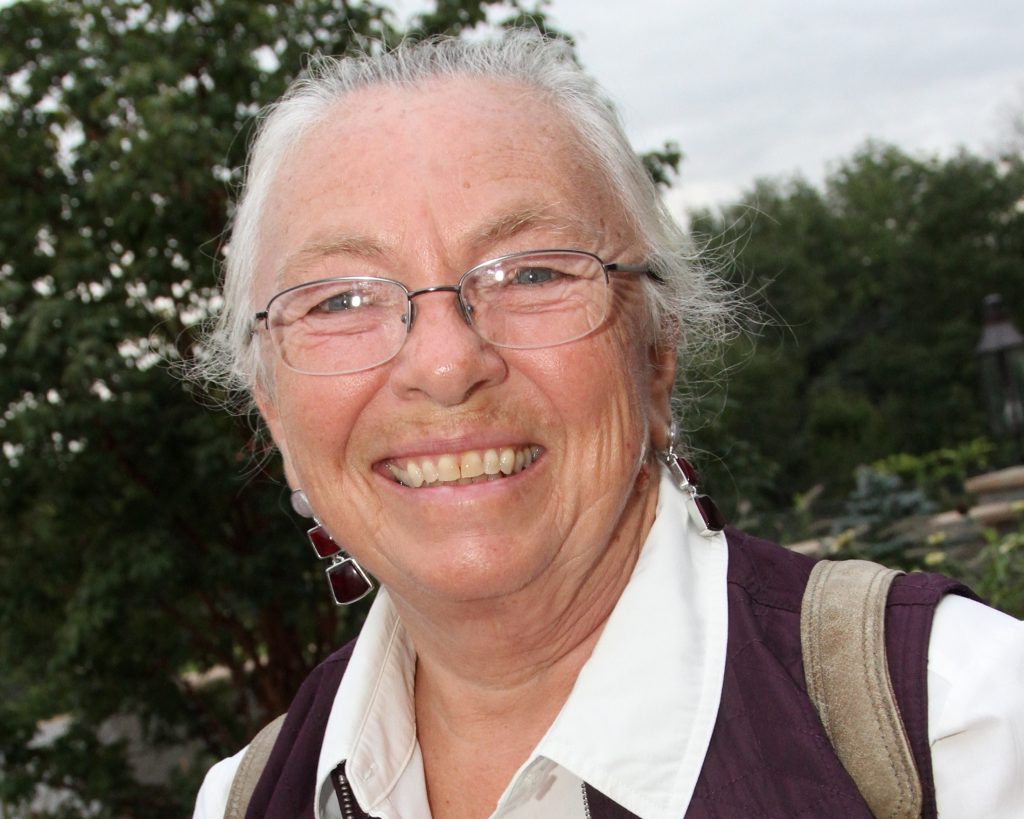
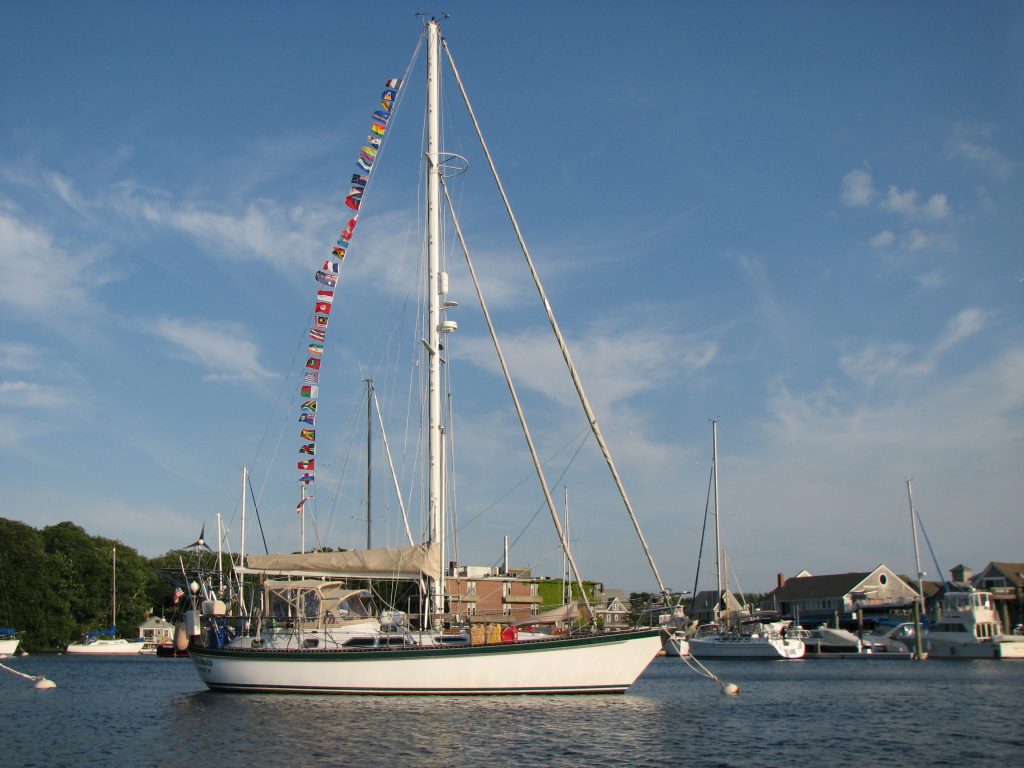
After almost 6 years of traveling, we sailed into Woods Hole on Cape Cod. We continued living aboard for the next five years and I wrote about that, adding ‘and Beyond’ to the title of the blog. Then shortly before Mark’s death in 2016, we sold our beloved Windbird and my travel logs became land logs. At this point, I had written a daily account for each and every day for 11 years. I fully intended to end the blog at that point, but when I wrote that news in a log, I got many responses saying that I really needed to keep posting. At the same time, I realized that I couldn’t stop writing. Summarizing each day had become a permanent part of my life and I will probably continue writing until I can no longer. These postings reflect the ordinary, and sometimes the extraordinary, days in my life and I would like to invite you to join me on my journey.
Day 260, Year 5 Nosy Sakatia to Tani Keli to Nosy Kisamani
Day 260, Year 5 Nosy Sakatia to Tani Keli to Nosy Kisamani
Date: Tuesday, July 13, 2010
Weather: No More Rain; All Sunshine
Latitude: 13 degrees 34.820 minutes S
Longitude: 048 degrees 05.112 minutes E
Location: Nosy Kisamani, NW Madagascar
The trek south has begun. We left Nosy Sakatia early this morning and picked up a mooring ball off Tani Keli at 9:30 am. Just this year Tani Keli has become an official national park and marine reserve, and as soon as you arrive someone comes out in an official national park boat to give you directions on where you can anchor or pick up a mooring ball. We arrived just before Constance, so we picked up the only mooring ball available for bigger boats. I would never spend the night on that mooring, but it was great for today’s use. We hopped in the water and swam over to the designated snorkeling area. Mark and I had on our 3 mil dive skins which protected us from the little stingy things in the water and kept us warm. Ed and Lynne only have thin Lycra suits and they had to get out before us as they were very chilly. But we all enjoyed the very clear water and the fish. We saw all the same varieties that we had seen at Nosy Sakatia, just more of them, plus a few new fish. The wrasse and coris which are always colorful fish, were really a highlight at Tani Keli. They were larger than we have seen before and therefore easier to photograph, so we got a few good photos of species that we have been trying to capture for months. We saw a huge grouper and a scary looking giant moray and then we saw a nursery full of baby butterfly fish and loads of anemones and different types of anemonefish. So snorkeling was a success and then we returned to Windbird to clean off the prop and the waterline. While we were cleaning we saw that the three Remoras that attached themselves to our keel in Nosy Sakatia have stayed with us. Remoras are commonly called shark suckers and they attach themselves to sharks and other large fish, sometimes whales, and in this case, to a sailboat. They’ll eat any good garbage thrown overboard and can’t hurt anything, so we don’t mind having the hitchhikers. After two hours in the water, we got out to eat and then headed to shore to take a short hike to the lighthouse at the top of the island and to see the fruit bats, lemurs, and birds that live on the tiny island. The lemurs were Brown Lemurs, different from the Black Lemurs on Nosy Komba, we were excited about seeing a different species. They charge 10,000 Ariary which is the equivalent of $5 US per person to enjoy the Tani Keli experience, but it was worth it. We will probably stop there again when we return from our trip south.
We motored three hours into the afternoon sea breeze coming from the west as we headed southwest to Nosy Kisamani. This is a little island just off the mainland. We actually decided to anchor in a bay off the mainland across from Kisamani, but we will explore that island by dinghy tomorrow. We are anchored off a part of the mainland that juts out to the west before heading south again, and we might spend a few of days in this area exploring other islands before heading to Russian Bay which is at the end of the westward jutting piece of mainland. Once there, we will probably spend a week or so before moving further south.
 |
| 100713 Day 260a Tani Keli, Madagascar–Underwater Tani Keli |
 |
| 100713 Day 260b Tani Keli, Madagascar–Tani Keli Land Explore |
Captain’s Ramblings 1, Year 5 – Dinghies
Captain’s Ramblings 1, Year 5 – Dinghies
July 12, 2010
Sometimes folks who follow our website write us with questions, ideas, or suggestions. Rich Corbett has written often and recently asked our opinion of dinghies. This is an area where everyone has an opinion and every prospective cruiser would like some suggestions. I know we would have liked more information when we were purchasing the dinghy we would take with us around the world.
In 2004, as we were preparing for our circumnavigation, sailing friends Suzie Klein and Jim Hammitt invited us to dinner with friends of theirs who had sailed around the world. We had hundreds of questions for Tom and Harriet Linskey. It turned out that Judy had just taken a “Suddenly Alone” course that Harriet taught. The point of the course was how to cope if something happened to your spouse and Judy only wanted to find out what to do with the body! But that’s another story. We had a small inflatable dinghy at the time and seemed to get wet any time there was the slightest chop. So Judy suggested to Tom that we probably needed a RIB (rigid inflatable boat) with a hard bottom and much larger tubes than the current dinghy. The purpose of the larger tubes would be to keep us from getting wet all the time. Tom replied, “Judy, didn’t anybody ever tell you that sailing is a water sport!” We bought the RIB anyway and it is much drier than our old inflatable, but we have more than once repeated Tom’s reminder about a water sport. When the seas are really rough and the wind is blowing hard, we still get some spray over the bow, but not often. We have learned a lot from the three dinghies we have owned and from many other cruisers with all sorts of different means of getting from their boat to shore or to another boat or to their favorite snorkeling spot. What follows is what we have learned.
Your dinghy serves double duty as a family car and a utility truck on the water. You use it as a snorkeling or diving base, to haul fuel and water jerry cans from shore, to carry tons of groceries and drinks, to visit cruisers on other boats, as a platform to clean the topsides and waterline of your yacht, and to sail or paddle around the anchorage to explore. Sometimes you even use your dinghy for fishing which requires top speeds. The uses you make of it will determine the dinghy you need. Some people carry two because any one dinghy won’t meet all needs. For instance, a hard dinghy (fiberglass, plastic, or wood) can be easily rowed and may be adapted for sail. We know one boat that never uses an outboard as they sail their hard dinghy everywhere. On the other hand, a hard dinghy is difficult to get into from the water. If you do a lot of snorkeling (and you will) then this may not be the dinghy for you. Of course, your age and agility also have an impact on this. On the other hand, a RIB is much easier to enter from the water, especially if you get a dinghy ladder. But a RIB is difficult to row and is usually much heavier than a hard dinghy.
Many boats carry a kayak tied to the lifelines. A kayak can be an easy and efficient way to get around. There are many times when we would love to not have to put the dinghy in the water, lower the outboard, get out the gas can, and hook it all up. A kayak could be a perfect solution in those cases. However, you won’t be ferrying jerry cans of fuel in a kayak, nor many groceries either. People who have kayaks always have another dingy on board.
Inflatable dinghies are the most popular choice. If you decide on an inflatable, you now have a lot of decisions to make. If you get a RIB, do you have enough room on the foredeck to store it? Even if you have dinghy davits on the back of your boat, you will want to store the dinghy on the fore-deck on passages. We sized ours to fit between the inner staysail and the mast. We are a cutter so room was limited; a sloop may have more room there. Another option would be to get a collapsible or roll-up dinghy. These are easier to store, but more difficult to set up when you need them. They also have less carrying capacity, tend to be wetter, and are even harder than a RIB to row. Though they will have something on the floor to stiffen them when inflated (either boards, slats, or an inflatable floor) the floor will tend to flex with the seas passing under the keel. Speaking of keels, collapsible and roll-up dinghies usually have a small inflatable tube beneath the floor which acts like a keel. However, it is not very effective at keeping the boat from skidding sideways on a turn. The deep keel of a RIB tracks and turns much better.
The most popular choice among cruisers we meet is an inflatable with a hard bottom. Rigid inflatable boats (RIB’s) commonly have hulls made of fiberglass or aluminum. Fiberglass is probably cheaper and can be patched by most cruisers themselves. Aluminum is lighter which may prove very important when you and your spouse try to haul the dinghy and outboard above the high tide line, but it will take special equipment to repair a gash in the bottom. Ours is fiberglass, but I would seriously consider aluminum if I were buying again because of the lighter weight. We had installed wheels on the transom of our fiberglass dinghy to help when pulling her up a beach. However, if the sand is soft, as it usually is, then they only add to the friction as they dig in to the sand. Some wheels are better than others. I would go for the largest diameter wheel with the largest rubber tire I could fit on the dinghy. Of course, this means even more weight!
The next decision involves the tubes: What material and how big? The usual materials are PVC and Hypalon. Both have their adherents. Ours is Hypalon which we bought because it is supposed to have superior UV resistance. However, the glue for Hypalon (you will need glue and patches for either material as you will get leaks) is expensive and should be stored in a refrigerator. Refrigerator space is already at a premium on a boat so this can be a drawback. PVC is easier to patch, and if UV is a problem, you can get a cover made to protect the tubes. You may want to do this no matter which material your dinghy is made of. But the most important thing about the tubes is the size of them. Get tubes as big as you can; seventeen inches in diameter is a good size. They make for a more comfortable ride and will keep you drier.
Your dinghy will come with a seat and oars. Our seat is rigid fiberglass and attaches to the tubes with end brackets that slip into straps built into the tubes. I think it comes out far too easily – just when you don’t want it to. Friends have a seat that lashes to PVC tabs on the tubes – much more secure! Some seats are inflatable – just another small tube set athwartships, usually attached with Velcro to the tubes. You will need the seat in order to row, which you will do from time to time–like when your outboard won’t start or you need to tilt the outboard up so you can go over coral. While we’re on the subject of oars, it is worth considering the location of the oar mounts on the tubes. Ours are outboard and require us to turn the oar upside-down to get it into or out of the mount. The effect of this is that the oar is usually still in the mount as we come along side of our boat and it sticks out so that it can scratch the boat. Luckily most dinghies we have seen do not have this problem.
Our dinghy has a double floor which is nice as it provides a flat floor in the dinghy while allowing for a “V” keel. Some even have storage compartments built into the bow. But remember, every little bit of weight added will increase the difficulty of beaching or hauling the dinghy on board. There are many options that complicate the decision making process, and we haven’t even discussed the outboard motor yet.
I will make only a couple of comments on outboards. First is that Yamaha and Tohatsu motors have world-wide distribution and maintenance facilities. Many other brands do not. Check on that as you will need parts and perhaps even professional maintenance somewhere along the line. Secondly, consider size and weight. Check to see what the maximum horsepower outboard your dinghy can handle. We had an 8-horsepower Suzuki when we bought our 15-horse Yamaha in Malaysia. We made a mistake when we got rid of the Suzuki. We love the Yamaha as it allows us to plane our nine and a half foot fiberglass RIB with four people onboard. But it is heavy and it is a desirable target for theft. The Suzuki was old and needed constant attention, but it ran and we wouldn’t have to worry if it were stolen. Ideally we would have two outboards: the Yamaha for big loads and going long distances and a smaller outboard (maybe 2- to 4-horsepower) for normal running around. The Yamaha requires a 5-to-1 block and tackle to lift it from dinghy to its mount on the boat. A smaller engine can be lifted with one hand.
Everyone has their opinions as to what makes the best dinghy. I am no expert. I can only speak from experience. We currently own an AB fiberglass dinghy with a double bottom and seventeen-inch Hypalon tubes. It has a hard fiberglass seat that broke once when we came off a wave so has been reinforced. We also bought a dinghy ladder to facilitate getting into the dinghy from the water and this is a real plus when snorkeling. This dinghy has served us well. However, it is heavy and the older we get the harder it is to handle. If I were to start over again I might choose an aluminum hull. I would get more patches and glue for my tube repair kit. I would make, or have made, a protective cover for the tubes. I would definitely look for one with better mounts for the oars and a better way to attach the seat to the tubes. And I would have a small outboard in addition to the 15-horse Yamaha. Your dinghy is your only way to get from your boat to land, so don’t underestimate its importance in your cruising plans and budget.
Day 259, Year 5 More Rain, More Snorkeling
Day 259, Year 5 More Rain, More Snorkeling
Date: Monday, July 12, 2010
Weather: Rain Overnight, Partly Sunny Day
Location: Nosy Sakatia, NW Madagascar
As predicted by John Sheppard’s cook, we got heavy rain just around mid-night and it rained for a good two hours. The local lore tells us that if you are going to get rain in the dry season, it will be on the four days of the new moon. Well, that is what is happening. John thinks we will have even more rain tonight, so we shall see. Unfortunately, the rain catcher we made in Chagos doesn’t work very well, so we are not able to take advantage of the unexpected tears from heaven. Ed and Lynne, on the other hand, have a good rain catcher and they were able to collect about ten gallons of water last night. We are just relying on our water maker.
It was still mostly overcast at 9 am this morning, but it was slack tide so we decided to snorkel, sun or no sun. We wear our dive skins which are about 3 mils to protect us from the sun and from anything that stings, but today we were glad we had them on to keep us warm. Eighty degree water with little or no sun feels quite cool. We took the dinghy over to the headland by Sakatia Towers and did our snorkeling there today. We were amazed by the amount and variety of soft corals, even more anemones than we saw yesterday, and anemonefish that are definitely at the large end of their growth expectancy. Mark focused on getting video of the beautifully swaying soft corals and anemones today, but he captured a few good shots of the small fish. We didn’t see turtles or large fish, but we did see our first parrotfish in Madagascar. Tomorrow morning we pull up anchor at 6:30 am to head out to Tani Keli which is only nine miles from here. We will have current against us at that time of day, but we want to get there to snorkel before the turn of the tide and the arrival of hordes of tourists around 11 am. Tani Keli is a marine reserve and is said to have the clearest water and most abundant fish on the west coast of Madagascar. We hope the reports are correct. After snorkeling and possibly doing a walk on land, we will up anchor and head another twelve miles south to a more protected bay for the night. The holding is not good at Tani Keli, so we don’t want to chance staying there. Our goal for tomorrow night is Nosy Kisamani. So our venture south is about to begin.
Late this afternoon, Mark and I went in to Sakatia Towers to peruse some of John’s books on Madgascar and Africa. As always, John had so much information to share with us. He is just good company, but we cannot express how grateful we are to him for being so helpful. We are going to miss our forays up to the Towers, but we will be back here in a month and can once again enjoy talking with John. He told us this afternoon that if we would sit on his deck for an entire day, we would see about twenty-six different species of birds. So that is on our list for the return trip. We stayed late enough this afternoon to witness the circling of the bee eaters (birds) as they returned to the mangroves for the night. We were able to watch this event up-close and personal from the jetty where we tie our dinghy when visiting the Towers. This is a wild and unspoiled land and we appreciate it more and more every day.
Mark has written a “Captain’s Ramblings” on dinghies. It is being posted today and follows this log.
 |
| 100712 Day 259a Nosy Sakatia, Madagascar–Underwater Sakatia Headland |
 |
| 100712 Day 259b Nosy Sakatia, Madagascar–Dinner at Sakatia Lodge |
Day 258, Year 5 Raining, Snorkeling, Dining
Day 258, Year 5 Raining, Snorkeling, Dining
Date: Sunday, July 11, 2010
Weather: Rain Overnight-First Real Rain in Madagascar
Location: Nosy Sakatia, NW Madagascar
Overnight, we got our first real rain since arriving in Madagascar. While in Apanasia Bay at the top of the island we had a few light showers on June 18, but since then it has been dry. But during the night last night we got a good rain that washed the boat. Thank you, rain! It was still cloudy this morning, but regardless we decided to begin our day by snorkeling. We were so excited to find some colorful coral, lots of anemones, and many interesting fish. We saw four-inch long pink anemonefish, the biggest we have ever seen, some two-banded anemonefish, more anemones than we have ever seen in one place, and some beautiful crinoids that look like underwater feathery flowers.. The water was clear, but certainly not the crystal clear that we had in some Chagos locations, but we saw a number of small fish that we have never seen before and that made it certainly worth the snorkel. In fact, we have decided to stay here another day just to snorkel again. Ed and Lynne aren’t snorkeling with us, but they have decided to stay anyway. We will both move on Tuesday morning.
I spent my afternoon baking and cooking things to store for use later while Mark read. Late in the afternoon we called our daughter Heather and had a great conversation while Sam streaked through the room every few minutes telling us he misses us and loves us. Jonah was a quiet one today, but we learned that his hair has gotten even blonder and that despite all efforts to screen him from the sun, he has become a little brown biscuit. I think he has more than his share of Handley in him as that is definitely a Handley trait. Mark and I can be in the same sun for the same period of time and I tan a bit while he turns brown.
We picked Ed and Lynne up as the sun went down and headed over to Sakatia Towers for dinner. Ed had zebu while the others of us had prawns and rice after a delicious tomato, avocado, and citrus salad. We had freshly baked bread and a delicious green pepper sauce to pour over our prawns. Dinner was delicious and we once again enjoyed the company of John Sheppard. Shortly after dinner, he was headed to Sakatia Lodge at the southern end of the island to watch the final World Cup game between Netherlands and Spain. He was wearing his orange shirt and rooting for the Netherlands, but the owner of Sakatia Lodge is from Portugal and John expected some good spirited fun once he arrived. We’ll check in with him tomorrow evening to find out the outcome of the finals.
 |
| 100711 Day 258a Nosy Sakatia, Madagascar–Underwater Headland S of Sakatia Towers |
 |
| 100711 Day 258b Nosy Sakatia, Madagascar–Dinghy Trip to S End of Sakatia |
Day 257, Year 5 To My Sister–Happy Birthday!
Day 257, Year 5 To My Sister–Happy Birthday!
Date: Saturday, July 10, 2010
Weather: 21th Gorgeous Day Although Slightly Cloudy
Location: Nosy Sakatia, NW Madagascar
Today is my sister Patsy’s 77th birthday. Other than my Aunt Ethel who will be 95 in September and certainly looks like she is no older than 77, Patsy is the youngest looking 77 year-old I have ever known (she’ll kill me for giving her age). She is beautiful inside and out and I miss being with her today so very much. Maybe next year we can be together on July 10th. In the meantime, Patsy, enjoy your special day.
We spent most of the day on the boat working on our respective computers. Mark was working on the financial end of things and I was writing long over-due emails to friends. Mid-afternoon we took a break and walked up rocky hillside behind Sakatia Towers and went over the top and down the other side to the western coast of Sakatia. Ed and Lynne went with us and when we returned they stopped by for drinks, conversation, and our first tasting of home-roasted Madagascar peanuts. You buy the raw peanuts by the cup at the market and then pan fry them in just a bit of olive oil, shaking the pan as you would if popping popcorn. You then drain them on paper towels, salt them, and enjoy. They are really good.
Tomorrow morning we will try snorkeling at low tide which is early in the morning. We are not sure what tide level is best for snorkeling here, but we do know the water is clearer before the tide starts to come in, so we will give it a try. Ed and Lynne have some strange 3-4 meter creature hanging around under their boat. I’m curious, but not sure I’m curious enough to want to see it. But I am assured that I will see anemonefish here, so I’m looking forward to that. And a couple of turtles would be nice as well.
 |
| 100710 Day 257 Nosy Sakatia, Madagascar–Sakatia Hike |
Day 256, Year 5 The Watering Hole
Day 256, Year 5 The Watering Hole
Date: Friday, July 9, 2010
Weather: 20th Gorgeous Day; Cloudy Evenings, Clear Nights
Location: Nosy Sakatia, NW Madagascar
Just as animals gather at the watering hole, people seem to gravitate to comfortable places to socialize. Sakatia Towers is one of those ‘watering holes’ for people. Here on tiny Nosy Sakatia, John Sheppard has built a small resort that is a magnet for world cruisers as well as his guests who come to enjoy the seclusion of a small island in Madagascar with no roads, no stores, no nothing but beauty and a little speed boat to get you to the main island of Nosy Be. Sakatia Towers is a few cabins built with traditional materials, a main building with a bar, a kitchen, a library of used books, and a great deck overlooking the water, a generator to supply a little bit of electricity, a walkway from the dock to land made of sticks – really, and a very friendly staff of locals. It is nice but it is rustic and that is its charm. This is not the Hilton, and it is certainly not a tower, but we are loving our evening trips into the Sakatia Tower’s deck for sundowners and the chance to meet whomever is there that evening. Tonight Peppe and Bob of Far Niente who we first met in Chagos were there as well as a man named Bert, a South African who now lives here and sails a monstrous catamaran with Admiral Marine written along its side. Admiral Marine makes catamarans in South Africa but we are not sure of Bert’s association, but he is a wealth of information, as is John Sheppard. However, tonight’s main attraction was Olivia Wray. Olivia is John’s ten year-old step-daughter visiting here from Cape Town. John and Olivia’s mother, Heidi, were married just four months ago, and Heidi and Olivia have been here during the South African winter school holiday. Unfortunately they leave early in the morning, but we feel fortunate to have been here while they were visiting. Olivia, Mark, and I had a great conversation about schooling in South Africa and we made tentative plans to visit her school, the International School of Cape Town. Olivia made sure we knew that her school is different from the American International School of Cape Town and we had a good laugh over me writing today’s date as 7/9/10. In the US that would be July 9th, but in the rest of the world that would be September 7th as the month is always written first. We hope to keep in touch with her via email and meet again in South Africa.
Our morning was spent on a whirlwind shopping trip in Hell-ville. The Sakatia Towers speed boat picked us up at 7:15 am and took us across to the closest beach on Nosy Be. We were met there by Anatole who drove us to Hell-ville and helped arrange all of our purchases. We were buying food and drink for the next month, propane fuel for cooking, and more phone cards for long distance calls and internet. The afternoon was spent putting all of that away and now we have a couple of days to sit and relax before heading south. Olivia told us that we really should try snorkeling here as there are some interesting fish, and there is also a trek from Sakatia Towers to the long beach on the north end of Nosy Sakatia, so we will fit those activities into our weekend schedule.
 |
| 100709 Day 256 Nosy Sakatia, Madagascar–On the Deck at Sakatia Towers |
Day 255, Year 5 A Love Affair
Day 255, Year 5 A Love Affair
Date: Thursday, July 8, 2010
Weather: 19th Gorgeous Day; Cloudy Evenings, Clear Nights
Location: Nosy Sakatia, NW Madagascar
Slowly and quietly we have fallen in love with Madagascar. We have had just wonderful experiences every where we have been. It was certainly windy far up north, but we loved seeing our first baobabs in bloom. We moved south to Andranoaombi Bay and had our first trading experiences with the local villagers. The best trade was a pair of shorts and a t-shirt for two of the best mud crabs we have every eaten. Our visit to the upscale Tsara Banjina resort was lovely. Our time in Nosy Mitsio was very special, especially our walk across the island visiting various villages and seeing how the local people live their everyday lives. And buying four beautiful spiny lobsters for $6 US wasn’t a bad deal. Anchoring here at Nosy Sakatia is so comfortable. We can go ashore to Sakatia Towers, sit on the deck with a beautiful view of the anchorage and on across to Nosy Be, and talk with John Sheppard, the owner, who is just brimming with information on Madagascar and Africa. Nosy Komba was the highlight to date, however, because we got to play with the lemurs. We will see lemurs in the wild in various locations, but only on Nosy Komba are the lemurs so acclimated to humans that they will actively play with you. Add to all this the chameleons, the birds, the fantastic weather, and the gracious people, and it adds up to a love affair.
Tomorrow we will be picked up at 7:15 am by a little speed boat that will take us across to Nosy Be. There we will be met by John Sheppard’s driver, Anatole, who will take us into Hellville for a four hour shopping spree. We are going to purchase propane cooking gas, fresh food for the next month, canned and packaged goods to supplement what we already have, beer, wine, and a few boat supplies. We will then spend the weekend here getting ready for a month’s cruise south of here. We will then return here in mid-August, do our inland travel, and head back up north to try and see the mother and baby humpbacks. By mid-September we will be back in this area to visit Nosy Komba and the newly born lemurs. Our three-month visa will be up the end of September and that is when we will check-out and head south once again on our way to Richard’s Bay in South Africa. At least this is today’s plan.
Day 254, Year 5 Happy Birthday to Mark
Day 254, Year 5 Happy Birthday to Mark
Date: Wednesday, July 7, 2010
Weather: 18th Gorgeous Day; Cloudy Evenings, Clear Nights
Latitude: 13 degrees 18.113 minutes S
Longitude: 048 degrees 10.707 minutes E
Location: Nosy Sakatia, NW Madagascar
Mark had a very happy birthday. He got an early morning mail from Heather and a mid-day call from Justin. This made him a very happy man. We learned that we can receive Skype calls that do not charge our cell, so that is very good news. We moved from Nosy Komba to Nosy Sakatia, had a great Mexican dinner aboard Constance to celebrate Mark’s birthday, and hope to spend a few days here just relaxing and planning our next adventures.
 |
| 100707 Day 254a Nosy Be, Madagascar–Fish Processing Plant in Crater of Crater Bay |
 |
| 100707 Day 254b Nosy Sakatia, Madagascar–Mark's Birthday |
Day 253, Year 5 Another Play Session with Lemurs
Day 253, Year 5 Another Play Session with Lemurs
Date: Tuesday, July 6, 2010
Weather: 16th Gorgeous Day in a Row BUT Cloudy, Cloudy Evening
Location: Ampangorina Village, Nosy Komba, NW Madagascar
Mark and I just can’t get enough of playing with lemurs, so we ventured back into the village late this morning to have another play session. The people at the park office know us so well now that we didn’t even have to pay the fee, but our guide from yesterday, Rio, wanted to go with us anyway. We now know where the different troupes of lemurs hang out, so we went to the closest location and started calling, “maki, maki, maki.” The call plus a little banana and they come scrambling down out of the trees. This time we had one mature female and one younger with three young males. I can’t wait to come back here in September and see the babies. Rio said the babies ride on the mother’s tummy for 90 days and then ride on the mother’s back for the next 30 days. At that time they are weaned, but we are not sure what happens next. We don’t know if they stay with the mother once they are weaned or if they are sent out into the world to be on their own. We think Rio was saying the babies will join a different troupe, but we were not sure. But one thing we do know is that by the time we leave Madagascar we hope to learn as much as we can about these delightful little creatures.
After playing with the lemurs we spent time walking about the village looking at all of the beautiful embroidered table cloths and door and window hangings. We have never had curtains in Windbird and we thought we might be able to buy some of the narrow hangings and turn them into curtains, but we don’t think it is going to work. These embroidered pieces are called recelet. They begin as a piece of plain muslin. Then the women draw the designs on the cloth free-hand. We watched a woman do this today and it was fascinating. Then every drawn design is outlined with an embroidery stitch taught to the women here by the nuns in the missionary. When everything is embroidered, they then cut out the material inside the embroidered designs. The traditional purpose of recelet was to hang the pieces in the doorways and windows of huts to allow for a little privacy but still allow light and air to flow through the holes. Somewhere along the line, the women of the village discovered that they could sell these pieces to tourists in the form of tablecloths, and sell them they do. Since this island is very close to Nosy Be, tourists can be brought in by speedboat and traditional dhows every morning. They stay just long enough to buy recelet and wood carvings and then back to the main island they go. There are also a number of small resorts on Nosy Komba, some in our little village and some on the south side of the island, and these tourists buy as well. Most pieces sell for $25US or under, and in Madagascar $25US is a lot of money.
We added to the local economy today by buying a few pieces, so now we are ready to move on. Tomorrow is Mark’s birthday and he wants to go back to Nosy Sakatia so that we can purchase more food and drink and head ourselves south for a few weeks. So since he is the birthday boy, he will get his wish. We are all set to pull up anchor and move on in the morning, weather permitting. We have had over two weeks of beautiful weather, but a heavy cloud cover came in late this afternoon and we’re not sure what that means. If it is raining in the morning, or the wind is blowing from the west, we will stay here. Otherwise, it is back to Sakatia. Wherever we are tomorrow night, Ed and Lynne have invited us over for a Mexican dinner complete with Margaritas. That will be a perfect way to celebrate Mark’s birthday.
 |
| 100706 Day 253 Nosy Komba, Madagascar–More Lemur Fun |
Day 252, Year 5 Walk to the Top
Day 252, Year 5 Walk to the Top
Date: Monday, July 5, 2010
Weather: 15th Gorgeous Day in a Row
Location: Ampangorina Village, Nosy Komba, NW Madagascar
Today’s walk to the top of the mountain took us from sea level to 1,850 feet in three hours and we are estimating that to be about four miles. Climbing the first 300 feet up, walking what felt like straight up the mountain, was the hardest, but the whole trip was exhausting. At the same time, we had a great guide, a young man named Rio, who shared so much information about the flora and fauna of Madagascar. He is just learning English, but he did a great job. We saw a gecko, lizards, two different kinds of VERY large snakes, two large birds, and loads of tiny butterflies-white, yellow, orange, and blue. We learned much about how people here traditionally use the wayside plants for medicinal purposes, and from time to time we emerged from the jungle to have great views of the area. We learned much about the history of the island including the coming of the Catholic mission in the mid-1830’s, the building of a sanatarium on the mountain later in the 1800’s where military personnel were brought to recover or die or from malaria and various bronchial problems, mostly tuberculosis.
The lizard we saw was a Zonosaurus madagascariensis with gold, cream, and black coloring. The snakes were boas and a couple of Madagascar hog-nosed snakes. Both are at least six feet long and two to three inches in diameter, but not threatening in any way. Rio could pick them up and plop them back down so we could see them more clearly. The birds we saw were black crested drongos (Dicrurus forficatus) and the giant coua (Coua gigas). Getting a photo of this guy deep in the jungle was not really possible. I have a great shot of the very long tail and a shadow of the whole bird, but nothing identifiable. At various places along the way we could smell the wonderful perfume of the ylang ylang trees. We visited the village of Antamanom (means city of the missionaries) which was built by the Catholic missionaries, another tiny village off the beaten path on the way to the military cemetery with wonderful examples of traditionally built homes, beautiful gardens, and Arabica coffee drying everywhere on the ground. All of this was at about 1,500 feet, so walking up and down the mountain has to be an arduous task. But we met women carrying heavy loads on their heads with babies on their backs, and men toting bags of sand. These are hardy folks!
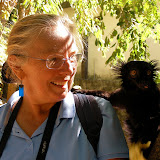
At the end of the trip, after six hours of hiking, we descended back to the Parc Lemurier and visited the tortoises, chameleons, and lemurs once again. We enjoyed our second look at the tortoises, the panther chameleon, and the lemurs. The chameleons are fascinating in that their circular eyes are covered with skin, all but the pupils, and the eyes can be swiveled independently so that one eye is looking at me and another at Mark. Today the male climbed on to Mark’s arm and went from Mark to Lynne to Rio. We only got to play with the all black male lemurs today, but what a delight. Rio had fed most of the bananas he had to the tortoises, so the lemurs proceeded to steal what was left from the giant tortoise. They have no fear. We are absolutely addicted to them and will return in the morning for another visit. They are just too much fun.
 |
| 100705 Day 252a Nosy Komba, Madagascar– Hike to the Top |
 |
| 100705 Day 252b Nosy Komba, Madagascar–Madagascar Embroidery |