by Judy Handley | Jun 21, 2007 | Fiji, Sailing Logs Year 2 |
Day 58, Year 2: Naroi in Mourning
Date: Thursday, June 21, 2007
Weather: Sunny Day; Still NE Winds 15 Knots
Location: Naroi, Moala Island, Lau Group, Fiji
At promptly 9 AM we went to shore as we had arranged with Litia, the chief’s wife. Before we got all the way in we could tell that the village was in mourning. School children were walking back from the village green in their athletic uniforms, men walking on the road had on dress sulas and dark shirts, and the woman on the hill by the chief’s house had on black dresses and wore pandanus mats around their waists. This is mourning dress in Tonga but we had no idea that Fijians also wear the mats.
They might not on the main islands, but since the Lau Group is halfway between Tonga and Fiji, the Tongan influence here over the years has been great. We could see Litia waving us back, we waved, and I threw a kiss which she did in return. I doubt that we will see her again before we leave and I’m a little saddened by not saying a personal farewell. But it is not respectful for strangers to come to the village during mourning, so we must respect that. I had printed some pictures that I wanted
to leave with them, but we will look for a fishing boat coming by in the morning to see if they will deliver them to the chief for us. We are wondering where they bury people here. We have seen no graveyards in the villages we have been in since leaving Suva. Graveyards in Suva are prominently located, but in the out islands, they must be hidden away. Many questions. I guess we will ask when we arrive at our next destination.
Today was a day of “reality.” I looked at the calendar and realized that we have only two weeks before Mark’s brother arrives in Savusavu. Time sure flies when you are having a good time. We spent more time in Beqa than planned–waiting for a weather window. We spent more time in Kandavu than planned–waiting for a weather window. And we have spent more time here at Moala than planned–waiting for a weather window. Those weather windows seem to be few and far between this season. So we made
a decision late this afternoon to skip visiting the island of Tuvuca and will go straight to Vanua Balavu. Again, this was a hard decision for me. Tuvuca offers a people who have little if any contact with the modern world. But Tuvuca has no real anchorage. It is only possible to anchor there with an east wind, and we are still having wind north of east. Vanua Balavu offers the most beautiful anchorages that Fiji has to offer, but the people have had more contact with the outside world. After
long and hard thinking, we opted for beauty over remoteness. So in the AM we will head directly to the Exploring Iles in the Northern Lau Group. Vanua Balavu sits inside a barrier reef with eight other smaller islands. On the northwest of the Iles is Qilaqila or the Bay of Islands. It is supposed to be a “spectacular place for yachties to draw anchor” according to the Lonely Planet. By noon on Saturday we should know if the place is as beautiful as advertised. We talked with a boat named Christina
on the radio this morning and they just left there. They did say it was beautiful and they are sending us some waypoints for their favorite anchorages via email.
Today was also a day of connections. Since there was no field day to attend, we came back to Windbird and did a little reconnecting. we are planning to return to the United States at the end of this cruising season and work for a few months before returning to Australia and continuing our trek around the world. We wrote resumes and contacted old friends. Mark had an especially good time connecting with friends and faculty from college days at Eastern Illinois University. Darlene Miller wrote
with updates on friends who were on the Speech Department faculty and even his college roommate, Jim Rinnert. Darlene found us online through our web site. What a blast from the past!
We have heard from a few other cruiser friends recently. Bob and Dianna on White Swan have recovered from the traumatic passage from New Zealand and have headed out in the Mamanuca islands with Zfarse and New Dawn. Joe and Cindy of Maggie Drum have reached Suva, and Ranger is back in Suva as well. Quantum Leap with Tom and Bette Lee are on their way from New Zealand to Tonga. They have 420 miles to go and have had some ugly weather. Tom has been sending daily updates and he is truly a fantastic
story teller. Here’s a bit of his log from today, “We are in the grip of the dreaded low pressure system. In New Zealand they are experiencing 40 knots of wind with 15-20 foot seas. Up here things are not so bad, with 20-30 knots of wind and 5 foot seas. The problem is that the wind is blowing from the direction we want to go. We are having to sail against this torrent of wind. Sailors call it “beating”. Bashing, crashing, thrashing, splashing…would also be excellent words. QL is as salt encrusted
as a virginia ham. Moving around is much like standing in the saddle of a mechanical bull.” Eloquently stated!
So tomorrow morning we head a little north of northeast. We hope that winds come around to the east from the northeast, but if not, we will be doing a little bit of that bashing and crashing that Tom describes above. Let’s hope that is not the case.
by Judy Handley | Jun 20, 2007 | Fiji, Sailing Logs Year 2 |
Day 57, Year 2: Long Walk on Moala
Date: Wednesday, June 20, 2007
Weather: Sunny Day; NE Winds 15 Knots
Location: Naroi, Moala Island, Lau Group, Fiji
Since Leaving Suva three weeks ago, we have not been in places where long walks on land have been possible. We did have a wonderful walk to the top of the knoll on Dravuni Island, but other than that, we have basically been on the boat or in the water snorkeling. So today we walked. We worked around the boat for a couple of hours and at about 10:30 AM we took the dinghy to shore. It was high tide, so Mark dropped me off on shore and he took the boat out and tied it to one of the sticks where other small boats were tied. This meant wading almost up to his waist, but as we learned yesterday, it is the only safe way to leave the dinghy here when going ashore. The head teacher of the elementary school walked by as we were securing the dinghy. He was on his way to the village green where the primary students were preparing for tomorrow’s athletic field day. I told him we would love to attend and he said we were more than welcome. That event will start at 9:15 tomorrow morning. We walked up to the chief’s house to check-in with his wife, Litia, about coming to dinner tonight. When we saw her yesterday we weren’t sure we were going to be here, but the northeast winds are keeping us here another day or so. Litia explained that a woman in the village has taken ill and is not expected to live, so it wouldn’t be appropriate for the chief to be entertaining people for dinner. We hadn’t figured out how we were going to find our way back to our boat in the dark at low tide anyway, so that probably worked out for the best. Litia also explained that there will no field day tomorrow if the woman dies tonight, so she asked us to come to see her at 9:00 in the morning to check the status of things.
We are rocking and rolling at anchor tonight. The winds switched this morning and are now coming from the northeast. That leaves us exposed and the swell is coming in. Its not terrible, but standing up to do anything takes a little more effort than normal. The winds are supposed to continue to come from the northeast tomorrow, but by Friday they should be coming out of the east. If nothing changes, we still plan to leave Friday morning.
Now back to the walk. We walked around the island to the east today. We wanted to see the airport and try to make it to the next village. The airport is not far from town and there is a wide road leading there. On the way we passed a fenced complex that we assumed had something to do with the airport. Only one plane comes in here each week on Tuesday. Since tourists are almost non-existent, the plane is for locals who are going to Suva for a week. You can’t come and go on the same day, so you have to stay an entire week. When we got to the airport, we saw a man cutting the grass in the road we were walking on. He was cutting it with a bush knife. We had a nice talk and he explained that five men are employed to cut the grass on the road. They work for the Fijian DRT, Department of Roads and Transportation. Other people work for the government keeping the grass on the airstrip cut, but they work for a different department. Nothing is paved, and the grass grows quickly here, so they have full-time employment. Not everything is done by bush knife. They have one weed eater that they use as well. Since there are absolutely no vehicles on this island, we wondered why they keep the road cut so neatly, but we enjoyed it today and others must do the same. There used to be a truck on the island, but no more. We walked past more grass cutters and then came to a small house with loads of pandanus bunches laying in the road. A woman came out and explained that no one lives in the house. They just come there for processing the pandanus leaves. The leaves are cut, the rough edges of the leaves are stripped off, and the pandanus is brought to the house to be cooked. I couldn’t see what they cook it in, but it has be be a huge tub of some sort as the leaves are very long. They then lay the pandanus on the road in bunches to dry in the sun. When all of that is done, they can begin the weaving of mats. The mats are then sent to Suva to be sold.
We walked for well over an hour and finally came to a place were we could see the bay on the eastern side of the island. We decided not to go all the way to the village there as we were a little worried about the tide going down and leaving our dinghy high and dry. So we retraced our steps and got back to Windbird by about 1:30 in the afternoon. The dinghy was fine and the tide still high enough that we could get out easily.
If there is no field day tomorrow, we plan to do a little reef snorkeling here and get ready for our departure on Friday morning. We’re still not sure that we are really going to be able to anchor safely at Tuvuca, so we plan to leave here early on Friday so we will arrive there just after sunrise on Saturday morning. If we can’t figure out how to anchor safely, this will leave us enough time to get to Vanua Balavu, our next stop, before sunset. We have no information on Tuvuca, so this will be a real adventure.
by Judy Handley | Jun 19, 2007 | Fiji, Sailing Logs Year 2 |
Day 56, Year 2: Visit to Naroi Schools
Date: Tuesday, June 19, 2007, 1930 Fiji Time
Weather: Gorgeous Day; Windy in the Anchorage
Location: Naroi, Moala Island, Lau Group, Fiji
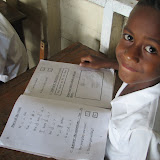
Our day started early this morning with a visit to the Naroi Primary School. This school includes kida (prounounced kinde) plus class 1 through class 6. We were able to pole the dinghy all the way to the shore, but a young man standing on the road looked at us in a way that made us think that tying the dinghy to shore was the wrong thing to do. We tried it anyway, and the dinghy was pushed up against the rocks. Now we knew why he looked the way he did. Not a good idea. So another young kid
took the rope and walked out to one of the poles that was waist deep to tie it there for us. Since the tide would be coming down as the day progressed, we knew we would be able to wade out and get it for the return trip home. The chief’s wife, Litia, had sent Ravula’s (the chief) neice to greet us and walk us to the primary school. So off we went. She introduced us to the head teacher and he invited us to sit down and watch the beginning of the day. All of the students gathered on the green
area between the four wooden buildings that are the school and then one of the teachers dismissed a few students at a time to go to the library building. The students sang “This Land Is Your Land” (in Fijian) and a few other songs and then we were asked to speak. It is at this point that I become really embarrassed that I can speak no Fijian. Hello (bula) and thank you (vinaka) are just about it for me, but both Mark and I spoke about sailing around the world and about our jobs before we left to
go sailing. The students were then dismissed to go to their classrooms. Classes 5 and 6 are in one building, classes 3 and 4 in another, and kida and classes 1 and 2 in another. We went to observe the little ones. Just as in classes in the United States, the morning started with students on the mat and the teacher at the chalk board. She wrote “Today is ____.” on the board and the students filled in “Tuesday.” Then she wrote “It is a _____ day.” And the students fill in with “windy.” They
then had an English lesson using the words sit, stand, run, and walk. The class 2 students were dismissed to go to their seats and the teacher continued working with the class 1 students. She explained that once she was ready to send them to their seats to work independently, she would work on the mat with the kida students. The classroom appeared to be a well-run multi-age with about 20 children and a first year teacher.
Our next stop was the secondary school just up the hill. The principal and the school manager (head of maintenance) were sitting under a shade tree. The principal, Iliesa, was dressed in a sula with a dress shirt and tie. He was very friendly and we explained that we just wanted to walk by the classrooms and then visit with Rosa in the Home Econonomics building. The secondary school has about 120 students and the buildings are small wooden structures with clapboard siding. We learned that the
principal is the chief’s brother’s son and the school secretary is the chief’s sister. Evidently being related to the chief is a good thing. Iliesa explained that the secondary school starts at form 1 (grade 7) and goes to form 6 (grade 12). We spent the next couple of hours in Rosa’s classroom. She had seven students from forms 5 and 6 and today was their practical exam. They were cooking a complete dinner and we were invited to stay and eat the results. They were making palisami which I have
really been wanting to learn how to make, so we stayed and learned. Palisami is taro leaves with onions and meat (canned tuna in this case) rolled inside the leaves, folded over twice, and then cooked in coconut cream. To make coconut cream you take coconuts with brown outer hulls, hull them, crack them open, and then scrape out the insides. You then add a little water and start squeezing the grated coconut. Out comes what lookes like milk. Mark tried scraping out the coconuts and found it to
be hard work. I tried and was not very good at it, but with practice I think I can learn. I think milking a cow is easier, but then that is what I am used to. These kids scrape out coconuts and squeeze out the cream with what appears to be no effort. Lunch also included fish and boiled taro and a really nice lemonade. It was a fun morning.
We left the school and walked by the chief’s house to see if he and his wife, Litia, were coming to Windbird for dinner. The chief was not home, but Litia was there and explained that Ravula had to be at the church this evening so they would not be coming. But she did invite us to dinner tomorrow night. We met the chief’s son, who is in class 5 and was home during recess, the chief’s mother, and a woman they call the queen. More about the queen later. A young man who was already out in the water
brought our dinghy to us and we returned to Windbird to do some boat maintenance. When we were leaving Korolevu Bay we noticed that not as much water was coming out of our exhaust and we had a white smoke in the exhaust that we had never seen before. The engine ran slightly warmer than usual on the way here so we knew we needed to find the source of the problem. Mark took the heat exchanger apart and cleaned the insides, put in new antifreeze, and found that this wasn’t the problem. We needed
to change the antifreeze anyway, and it was good to clean out the heat exchanger, but we still had the problem. He then disconnected an elbow at the thru-hull. Bingo! The elbow was clogged with seaweed and small pumice stones from Korolevu Bay. At low tide, the volcanic pumice floated on the water and evidently it got sucked into our intake system. Mark cleaned the elbow and put it back in place. When he started the engine this time, there was no white smoke (which was actually just steam from
overheated water) and lots of water coming out of the exhaust, so he earned his keep today. While he was doing this, I was helping some and cooking dinner for Rosa. She had told us she would come whether or not the chief and his family could make it. I fixed salmon cakes, canned spinach with diced tomatoes and Handley currey spices, and fried potatoes. I also baked the eggless chocolate cake that I had gotten the recipe for from Siteri on Dravuni Island. Rosa wanted to taste it and wanted the
recipe. Eggs are hard to come by out here on the islands, so a cake with no eggs needed is quite appealing. She had sent us home today with cassava root and grated coconut to make tapioca pudding South Pacific style, but I decided to make American style tapioca pudding and let her try that. When we went in to get her, we saw that the queen was coming to dinner as well, so we all piled in the dinghy and went back to Windbird. We only had an hour as it gets dark here just after 5:30, so we ate
as soon as we got back to the boat. Renadi (I think this is the spelling the Fijian word for queen) and Rosa liked the cake and the pudding, so I gave them some of the tapioca, some eggs, vanilla, milk powder, and baking powder. That should at least get them started.
We have decided to stay here until Friday if the weather reports stay the same as they were this morning. That means we will be able to go to dinner at the chief’s house tomorrow evening if we can get back to Windbird before dark. We hope to walk around the island to the next village tomorrow and and on Thursday, the primary school is having an atheletic field day that we will attend if we are still here. Leaving on Friday morning will get us to Tuvuca early Saturday morning. If we find that
we cannot get into the harbor there and that anchoring outside just won’t work, we will continue on to Vanua Balava and will arrive there late in the day. Venturing into the Lau Group is like a mystery tour as there is absolutely no information on some of these islands and no close-up charts. So we’ll give Tuvuca a try but we know we might have to go on. We do have charts for Vanua Balava and have much more information on that island, so one place or another, we will find a new anchorage to explore
on Saturday.
by Judy Handley | Jun 18, 2007 | Fiji, Sailing Logs Year 2 |
Day 55, Year 2: Arrival at Moala
Date: Monday, June 18, 2007, 1930 Fiji Time
Weather: Party Sunny Day; 10-12 knots ESE
Latitude: 18 degrees 33 minutes
Longitude: 179 degrees 56 minutes
Location: Naroi, Moala Island, Lau Group, Fiji
How many birthdays can one Queen have? June 4 was the Queen’s birthday in New Zealand. June 11 was the Queen’s birthday in Australia. And today was the Queen’s birthday in Fiji. So we arrived in the village of Naroi (roll the ‘r’) on the island of Moala on a holiday, but that wasn’t a problem here. In larger ports, arriving on a holiday is expensive as you have to pay overtime to the officials. Here we just had to check-in with the chief of the village, and it was fine to do that on a holiday.
Now I’ll backtrack to talk about the passage and then talk about the village of Naroi.
Trying to head east is not an easy task with trade winds coming from that direction. As our weather reports had indicated, the winds were at first from the southeast and under 10 knots, but as last evening progressed, the winds came more from the east. Sometimes we had 7 knots and sometimes 14. We tried to motor sail with the full main and headsail, but around midnight, I had to furl the headsail. So, for the rest of the passage, we motored with only the mainsail up. Of course, we could have
tacked back and forth and sailed without the motor, but that would have meant delaying arrival until after dark today and that is just not possible in these reef-laden waters. We had a knot of current against us most of the night, but the winds stayed light so we made good progress. We were shooting for an arrival time of 1:00 in the afternoon and we maintained that by increasing and decreasing the RPM’s. First light this morning was at 5:30 AM. It was very strange to have light directly in front
of Windbird as we don’t normally travel north and east. When the world is totally dark and you start to see spots of light that appear to be in the water right in front of you, you start to think a submarine with lots of lights must be surfacing. But as the light gets brighter, you realize that it is just the light of the sun on the horizon. By 6 AM I spotted land. Our ETA was not until 1 PM, but it looked like we were almost there. By 6:30 AM, the sun finally rose and at the same time, the
wind switched to come more from the east and directly on our nose. That eased about an hour after sunrise, and the rest of the trip in was non-eventful. And that’s a good thing.
We use MaxSea as our electronic charting with C-Map charts. And they are definitely off for these islands. According to the C-Map charts, we are currently anchored well on land. Out here it is all about being on watch constantly. When you see turquoise water, you turn the other way. But between paper charts, electronic charts that are off (but that train yourself to adjust based on just how far off they are), and having someone on the foredeck constantly watching, you make it in. It is certainly
not a science, but it works. I’m at the helm during all of this and Mark is on the foredeck watching and giving me directions. It is nerve-wracking for both of us, so once we anchored, we just had to kick back and relax for a bit. We delayed getting the dinghy in the water and going to shore for about an hour while we decompressed. But then we were back at it.
Low tide was approaching as we headed to shore. We made a decision to go around the reef that is between us and shore by going to the west and turning back in to the island. We found a spot to land the dinghy with a fairly short walk across the mudflats to land. We tied the dinghy to a rock that was conveniently placed on the mudflats and trudged on. We were being watched by anyone on the shore. We were definitely on display. When we walked up a concrete ramp to the beaten path on shore there
were some young men. We greeted them with a big smile saying “Bula” and they returned with the same. One young man came forth and introduced himself. His name was Enele. He was very well-spoken and said he would take us to the turangi or chief. He told us that the last yachties to visit here came in 2005 and were California. He explained that there were two boats in 2005. We know our friends from Galatea were here last year, but I think they came in the pass on the eastern end of the island
and must not have visited this village. As we walked along the path, he explained what we were seeing in the village. There was a village green where all of the primary-aged children were playing since it was a holiday and there was no school. He showed us the community center building, built much in the Tongan style with a rounded roof, and he explained that there is a definite Tongan influence here. He explained that he is half Tongan and as I am writing this, I am realizing that most people
I met today were much more Polynesian in looks than Micronesian. I’ll have to watch tomorrow to see if that observation is really valid. We had brought our dinghy to shore on the exact opposite end of the village from the chief’s home, so we had to walk through the entire village to reach our destination. The chief and his wife were sitting under a roofed area with mats on the ground. This was next to their very nice two-story concrete block home. We were welcomed to enter the meeting area by
the chief. We presented our yaqona or kava as our sevusevu and then got out our Lau Group permit and associated papers to present to him. The chief’s name is Ravula Draunidalo and his wife’s name is Litia. There was another woman sitting with them who explained that she is a secondary teacher presently living with Ravula and Litia. Her name was Rosa and she is a Nutritian and Home Economics teacher at the high school. The chief indicated something to Litia, his wife, and she quickly went into
the house and came out with a plate of lemons (really oranges, but called lemons) and a knife and invited us to partake.
As I was peeling an orange, the chief started the sevusevu ceremony. It was carried out in much the same way as the others we have attended. The chief says certain words and then claps and says, “Vinaka.” This means thank you. Then there are more words and everyone sitting claps and says the same. This continues a couple of times, and then you somehow know you are welcomed and the ceremony is over. We talked about the island and were asked where else we would be stopping in the Lau Group. We
are absolutely terrible with Fijian pronunciation, but with Enele’s help, we were able to explain that we will go from here to Tuvuca (pronounced Tubutha with the emphasis on the “tha”) and then on to Vanua Balava (Vanwah Balabah). If I leave here being able to pronounce my own name, I’ll be a lucky person.
Litia and Rose came back to Windbird with us. They wanted to visit our home and we had a nice visit. I tried to offer tea, but they declined, but they did accept an offer to come back for dinner tomorrow. Mark and I asked to visit the primary school in the morning and then at 4:30 PM we will pick up Litia, Rose, and hopefully the chief and his young son, to come to Windbird for dinner. Since sundown is around 5:30 we will have to eat fast and get them back to shore before 6 PM. After that, there
is no light and no way to know how to avoid hitting a reef with the dinghy. I’ll report more tomorrow night about that adventure.
I just went up into the cockpit to see if there were any lights in the village, and compared to other places we have been, it is lit up like a Christmas tree. Almost every home here has a solar panel given as a gift from the French government and they obviously use the power to light their homes at night. I’ve been looking for an island without television, but I haven’t found one yet. This one certainly does have TV. The secondary school has two computers, but I doubt that the primary school has
such a luxury. I guess we’ll find out tomorrow.
by Judy Handley | Jun 17, 2007 | Fiji, Sailing Logs Year 2 |
Day 54, Year 2: Happy Father’s Day–On Our Way to the Lau Group
Date: Sunday, June 17, 2007, 1745 Fiji Time
Weather: Beautiful Morning, Party Sunny Afternoon; 10 knots ESE
Latitude: 18 degrees 59 minutes
Longitude: 178 degrees 43 minutes
Location: Overnight Passage to Moala Island, Lau Group, Fiji
Last year, June 17 was a Saturday and we were in Cook’s Bay, Moorea, in French Polynesia. Our son Justin was visiting with our daughter Heather, so we called them on the SAT phone to say hello. This is when we found out that we were going to be grandparents, but we were sworn to secrecy for six weeks. Heather and Jed didn’t want people to know until after the first trimester, so hard as it was, we kept the secret. That was quite the Father’s Day present–one we will never forget. Hard to beat
that one. Things this year aren’t quite as exciting. Mark’s Father Day present is an overnight passage to Moala Island. He also got a box of Lindt chocolate truffles that I have been hiding since New Zealand and he says that is what he is eating for dinner tonight.
We left Korolevu Bay at noon and will arrive at Moala in early afternoon tomorrow. The weather did cooperate and we have light winds from the ESE. We are basically traveling from the east, and even though we are having to motor sail, if the normal trades were blowing 20 from the east, it could have taken us much longer to get there. The seas are also fairly calm, so waiting for the weather sometimes pays off. At 10 AM this morning, Safina and Scot Free II pulled up anchor and headed one bay south
to Galoa. At 11 AM, Moet did the same. Franz had come over with three year-old Dillon this morning to tell us they were moving on. We talked about where we might meet again, and it sounds like we will see them around the end of July when we are in the Mamanuca or Yasawa Groups. Dillon informed me that he saw absolutely no fish on his first snorkeling excursion. Maybe that’s because he didn’t open his eyes! When we left Waya Island yesterday, Sylvia was doing everything in her power to convince
him to put on a snorkel and mask and get into the water, but he was just replying with, “No, no, no, no.” Evidently she got him in, but he must not have opened his eyes if he didn’t see any fish there! We hope to see Safina and Scot Free II in Savusavu. They are going back to Suva before heading north to reprovision. We will have been out here over a month without going to a store when we arrive in Savusavu, and it will definitely be time for us to reprovision at that point. As we pulled out
of the bay, Ranger was the only boat left in the anchorage. It looked so lonesome. But they can’t move on until Cindy’s luggage is recovered. They are hoping it will arrive today and they will then move back north to the Astrolabe Reef tomorrow before returning to Suva. We will miss seeing our friends, and look forward to a reunion in Savusavu.
Moala is not actually part of the Lau Group, but it is administered by them and therefore you have to have the special Lau permit to go there. There is absolutely no infrastructure for tourism, so it is going to be an interesting stop. It is close enough to Suva that the people there send their bananas and coconuts on overnight boats to Suva for sale. I don’t know if that means that they travel there themselves, or if it is some sort of transport boat that takes what they have to sell to market.
We have absolutely no idea what to expect, and I’m certain we will be the only sailboat as I don’t think anyone else has been granted a Lau Group permit through the Suva office this year, and that is the only place you can get a permit to allow you to visit Moala. So this will be an interesting stop. It is halfway to our final destination in the Lau Group, the island of Vanua Balavu, and that is its draw for us. From here to there is open water with no islands and no reefs, so it was a convenient
stopping place. We also heard from Ernst and Anna Maria on Galatea that it is a good place to visit. They were there last year and enjoyed the time on the island. We will stay a few days and then we hope to move on to Tuvuca in the Northern Lau Group. That will be another overnight sail, and from there we go to Vanua Balav–just a day hop.
Thinking back to where we were last year, this year of cruising is very different. The people of the Marquesas and the Society Islands in French Polynesia are subsidized by the French Government, so people there have a much higher standard of living than the people in this part of the Pacific. It is hard to label what we see here as poverty. The people don’t have much, but they don’t seem to want or need much. They seem very happy, but we have not had discussions with them about their standard
of living. It is very simple, but almost every village we have visited has had a generator that works off and on, and when it is working, the villagers gather in the evening to watch television. That must have an impact on them. It will be interesting to see if there is television in the Lau Group. The Fijian government has worked hard to keep those islands isolated and more traditional. We shall see if they have been successful.
by Judy Handley | Jun 16, 2007 | Fiji, Sailing Logs Year 2 |
Day 53, Year 2: First Email from Sam
Date: Saturday, June 16, 2007
Weather: Still Windy, Still Mostly Cloudy
Location: Korolevu Bay, Kadavu Island, Fiji
\]
]\ //////////////KCCCCCC/////////////////////A BMM-P/ n [ ]; .’;;;;;;;./CCC99967t5f j,,,,,,,,,,,,,,,,,,,,,,,,,,,,,,,, ccdxg
..l9oozolpppp70pCVgft7u
No, this is not a typo. This is the content of our first ever email from that grand baby, Sam. This is the message just as he typed it, according to his father. So June 16, 2007, will go down in history as the day the youngest baby (147 days old today) sent an email. I sent one back to him, but it was not nearly as creative as the one he sent. Sam is starting to sit up now and is grabbing at everything in sight, including the nearest computer keyboard. I’m sure this is just the first of many
emails to come.
We are in a holding pattern but are still hoping to leave here tomorrow afternoon. The wind has subsided some, but not much. It has come around to the southeast, which is a good thing for us, but the problem is the sea state. Our Fiji reports are saying that the seas are rough. We’ll wait until tomorrow morning to make a final decision, but we will probably go, rough seas and all, unless high winds are predicted. We probably should have left a few days ago when we had a weather window, but
the snorkeling here was just too wonderful to leave. I think I can endure one night of rough seas while dreaming of a coral garden with the most beautiful fish one can imagine. That will get me through.
We have wonderful fish identification books onboard, but we have almost nothing that helps us identify coral and other sea creatures. Last night Paul on Ranger loaned me a book he had from Tahiti that showed some pictures of coral and had some nice descriptions. I spent my entire morning taking pictures of the pictures in the book and entering all of the written information into my computer. I’m a fast typist, but it still took me all morning. Mark spent the morning starting to read a new book.
He is reading River God by Wilbur Smith. It is about Egypt and I think I mentioned this when I read it a couple of weeks ago. He is entralled and it was hard to pull him away to go snorkeling, but we finally made the move. Gerry and Donna went out again today as well, and they took that new little digital underwater camera of theirs. We went over when they got back home and literally drooled over some of their pictures. They were kind enough to share and when I get to Savusavu in two or three
weeks, I will be able to post pictures of some the fantastic sights we have seen here underwater. Today’s prize was a lionfish. Well, technically it is called a turkeyfish, but it is what I have always called a lionfish, and what some other books call it as well. It was the classic striped fish with very long spines radiating all around. Actually Donna and I saw one a day or so ago, but today Gerry and Mark saw them and Donna was actually able to get pictures. I also saw pennant bannerfish today
for the first time, and a beautiful fish with a huge red ring just behind his head. But still for me, the highlight of the day was “finding Nemo.” I found an anemone I had not seen previously, and was able to bring Mark over to watch the pink anemonefish. I went on to search for the orange-fin anemone fish I have been observiing for the past few days. On the way, I actually found another little group of what looked like tomato anemonefish to me–dark orange, almost red. Mark got cold – the water
can feel quite chilly here – and went back to the dinghy, but I persisted and I found my little family so that I could say goodbye. The orange-fin anemonefish has two turquoise bands around an almost black body with a yellowish-orangish face and fins and a little white tail fin. They are beautiful and just so much fun to watch. I found Donna with her new camera and showed her the spot. She was able to get a couple of pictures, but you really have to be patient with these guys. They dart in and
out of the anemone and are very hard to capture on camera. But even without a photograph, I have fantastic picture memories in my head.