Day 112, Year 5: T-E-A
Date: Monday, February 15, 2010
Weather: Another Beautiful Day
Location: Bolgatty Hotel Anchorage, Cochin (Kochi), India
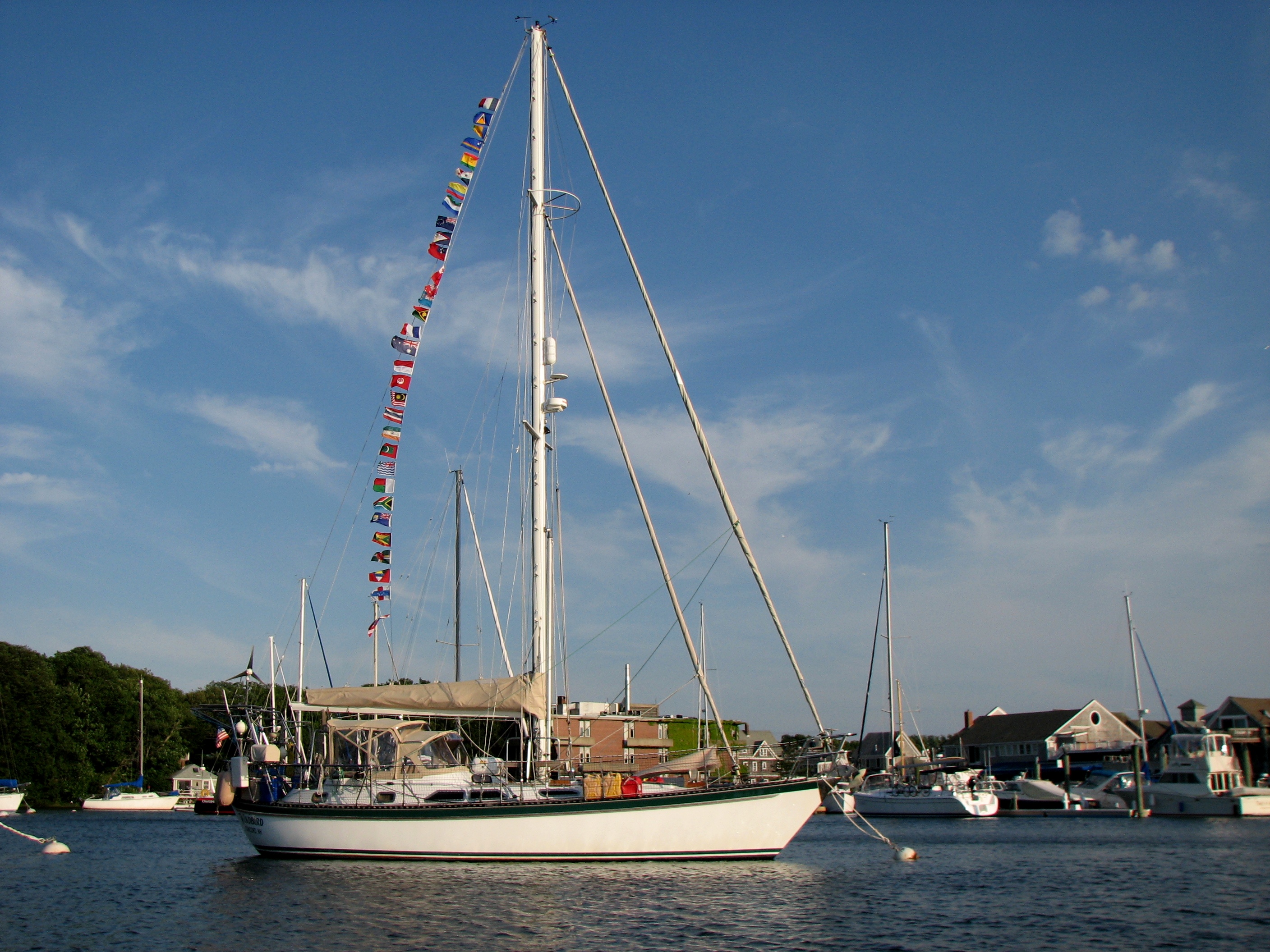
We are back home on Windbird after a whirlwind two day visit in the mountains. Today we actually managed to visit a spice garden just outside Kumily, drive on to visit tea plantation and factory, catch a bus just outside the tea plantation as soon as our tour was over, and get back to Ernakulam by 5 pm. By 5:30 we were on Windbird, so it was a much faster trip coming down out of the mountains than it was going up. It is always good to be home, but we did have two great tours this morning before hopping on the bus.
Our first stop was Abraham’s Spice Garden. This spice garden has been going since 1963. It is small, but jam-packed with flowers, spices, and fruits. The tour cost us a whopping $2.25 US and for one hour we were given more information than we could possible process. We learned that the difference between green, black, and white pepper is simply the way it is dried. We learned that cloves come from harvesting the blossom before it actually flowers and that allspice comes from one tree instead of being a combination of spices. We saw the world’s tiniest bees in little honey pots that evidently make wonderful honey and learned how tumeric, cardomon, and vanilla are harvested and processed. It takes an entire year to process the vanilla bean, thus the higher cost for that. It was such a surprise to us that the leaves of the cinnamon tree, the allspice tree, and the clove tree smell just like the spice although the spice does not come from the leaves. It was just a great one-hour tour, and then we were on to the tea plantation.
We traveled to the Connemara Tea Plantation, established in 1941. We learned that if a tea plant is left alone, it will grow into a tea tree that can grow to be about 50 feet tall, but that doesn’t happen with tea that is being grown to harvest because it would be impossible to harvest. So tea trees are now tea bushes that are just the right height so that you don’t have to bend over to pick the leaves. Tea “bushes” are kept in production for 150 years, but are cut back every five years. Only the two leaves surrounding the bud and the leaf bud are harvested, every fifteen days. All tea comes from the Camellia sinensis plant with black tea, green tea, tea leaves, and silver-tipped tea just being prepared and cured by different methods. Again, in a one hour tour, we were overwhelmed with the information passed on to us. We walked through the plantation of tea bushes, watched a PowerPoint presentation on how tea is processed at Connemara, and then walked through the processing plant. Here’s what happens to tea leaves that are hand picked. First they are placed on screened racks and air-dried or withered. The leaves are still green after withering, but are then sent into the CTC process. This is C-crushing, T-tearing, and C-curling. Just as an apple or banana browns after being cut, so do the tea leaves. So when you see them coming out of the crushing and tearing process, the tea looks like finely ground, wet coffee grounds. Then it is sent through the curling process on rolling screens and on to the fermentation process. Fermentation happens in something that looks like a cement mixer that keeps turning while heat and moisture are applied. From here it goes through something called a ball breaker, that simply looks like a huge vibrating colander that shakes the product so that any balls of tea are broken up. Then the tea is sent to the drying room where any fiber from stems is removed as waste and the good tea is sent on to the grading room. The best black tea is like powder and the lighter tea is much more granular. After seeing this process, we got to taste the best black tea from the powder and the lighter tea from the granular mix. Our guide was fantastic and we really enjoyed each stage of the process. He told us that the word tea stands for T-taste, E-energy, and A-appetite. He kept telling us about all the good things tea can do for your body. The only thing we saw that disturbed us was the spraying that has to be done to control tea leaf fungus. If we understood correctly, the sprays used are copper and nickel-based, so the next time I buy tea it will be organically grown!
Our guide helped us stop a local bus that would take us Kottayam where we would catch another local bus to Ernakulam. This local bus stops for people all along the way and makes detours in each major town to their bus station, but it was much faster than the super deluxe bus that we took on our way out to the mountains. Of course, on our way to the mountains, we were climbing all the way. Today we were flying down the mountains, but even when we reached the flat lands, the local bus seemed to be faster. But the local buses are crowded. We were often sitting with three of us on a two-person seat, along with our two huge backpacks. At one point, an Indian woman got on the bus and there were no seats. So Mark offered her his seat. She was probably younger than me as she still has a son in secondary school. Her name was Philomina. She spoke a little English and she wrote the names of her daughter and son for us and explained that her daughter could speak English and would call us tonight. And indeed, she did. The daughter explained that we were the first foreigners that her mother has ever met and that she would like us to come for dinner. That is difficult because she lives south of here about an hour and half bus ride away. I explained that it would be easier for us to come in the early afternoon so we could still get home before dark and I suggested this coming Sunday afternoon. I also said four of us would be coming. I included Lynne and Ed of Constance, as on Sunday we should be returning from a festival south of here. The daughter took in all the information and said she would call back. The logistics are a little crazy, but it would be wonderful to go to Philomina’s home. We’ll just have to see what happens with this one.
It is good to be back home and we made it just in time to say farewell to Judy and Dave on Freebird. They are leaving tomorrow morning for Oman. We will miss them and wish them safe sailing.
 |
| 100215 Day 112 India–Spice Garden and Tea Plantation |